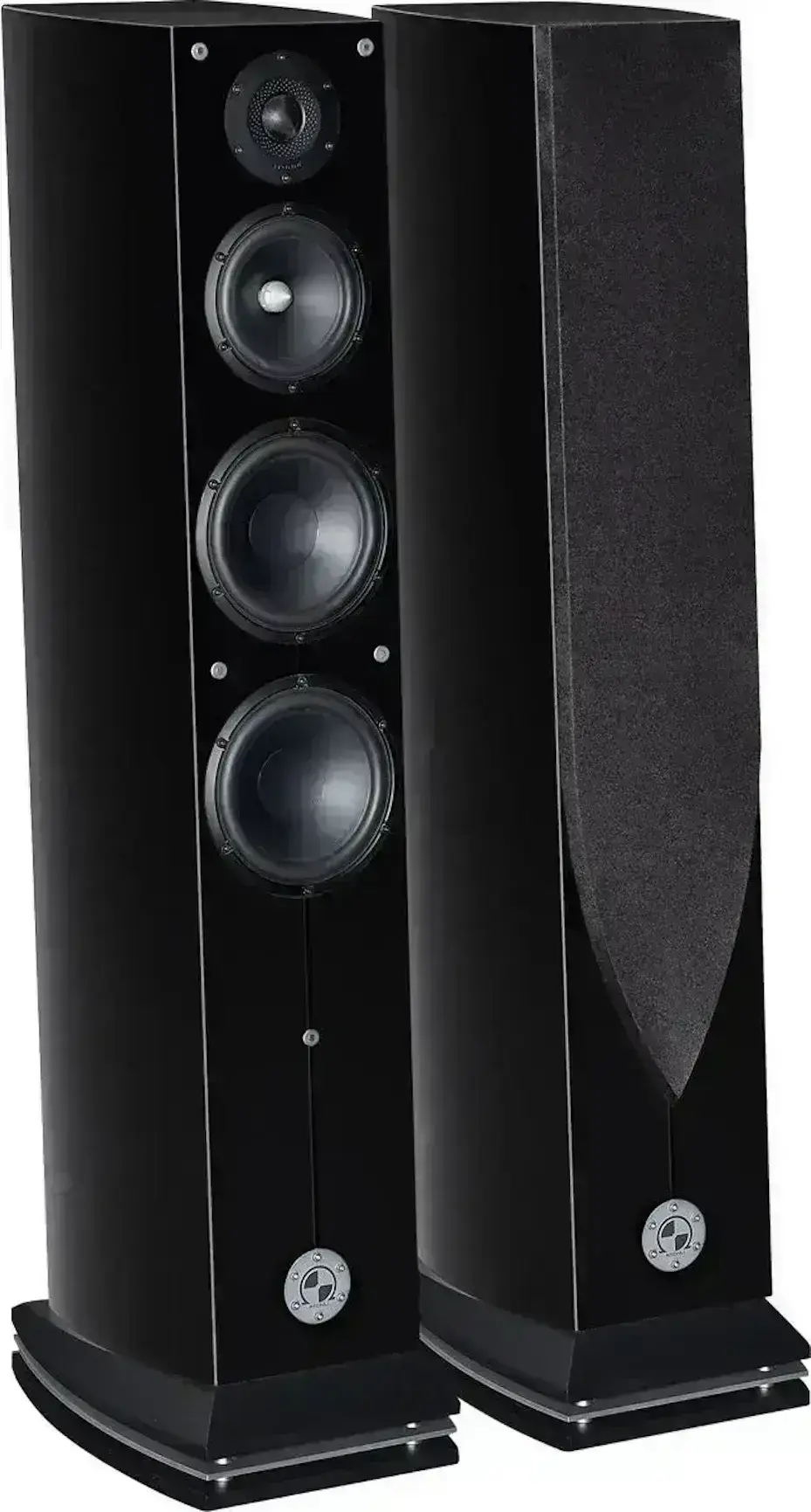
The Atohm GT3-HD Flagship Floorstanding Speaker is given a detailed reviewed by Douglas Moore
In my 40 years as an avid audiophile, I have seen about everything there is regarding speaker design. From weirdly shaped enclosures that try to break the laws of physics that govern the rest of the speaker-designing community to simple one-driver designs that take on the full range of musical frequencies with one driver. All speaker designers take different approaches to yield the same result for the most part. They are trying to bring to life a recorded musical event like it is being played for you in your home, or even better, to transform your living room into the room where the event was being played!
The issue comes with the fact that we listeners are human. This means our ears are all sensitive to various frequencies and how our ear/brain processes these sounds. This complicates an already complex issue, namely, having a speaker that is true to the music but at the same time caters to our hearing and perception. That is all we can ask for in a speaker: to stay true to the music as much as possible while catering to our sensibilities and the type of system/room we put them in.
Atohm is a French speaker company that has been on the scene since 2000. Its founder, Thierry Comte, started the company after working as the technical director for Triangle, another French speaker company. They started out making OEM drivers for other companies, including Triangle. A few years later, Atohm entered the finished speaker market with various models at different price points. Now, they offer finished speakers and separate drivers to the public.
The GT HD series is their newest flagship speaker, and I have been spending some quality time getting to know the GT3-HD flagship tower speaker. GT, in this case, is cleverly named the “Grand Thrill” series Atohm says their speakers are for the Grand Thrill of the music.
While the GT3-HD looks like a simple tower speaker design at first glance, a lot is going on here that must be understood to see Atohm’s vision for a flagship speaker in this price class. Atohm is a company that is very transparent about the technologies and designs they use in the GT series speakers. And published what Atohm calls its Technical Book about the GT series speakers, which goes into much more detail than I have the space to do here. I recommend that anyone interested in speaker design or these speakers read it because it is thorough and intellectually written. But I will touch on the essential parts of the design.
I like it when companies are open about their design decisions and don’t try to hide behind big words or explanations that we non-engineers can understand. When a speaker company can explain its choices to the public, it creates transparency and gives a would-be owner a little more confidence in their purchase decision.
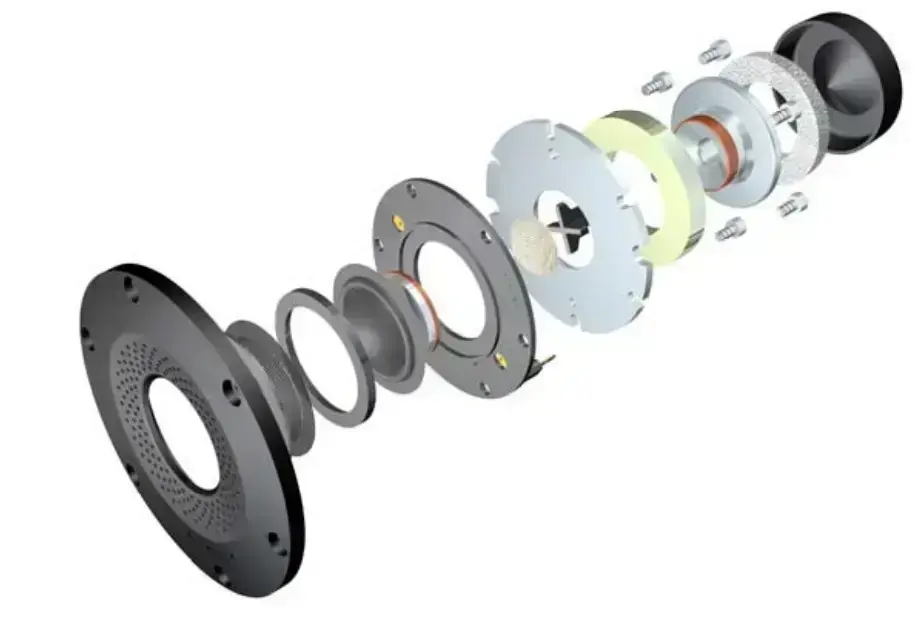
The SD28 ND04 RD tweeter is used in the GT series in Atohm’s flagship tweeter driver and was chosen for its soft, accurate, and refined response. It is fitted with a powerful neodymium ring magnet, which puts the sensitivity at 98dB/watt. This high sensitivity is attained without a waveguide or horn pressure chamber. A copper ring is added to linearize and reduce inductance, which helps the response at higher frequencies and minimizes intermodulation distortion. The voice coil is made from copper-clad aluminum wire or CCAW wire. This wire provides good conductivity but is also lightweight for better performance.
The front panel of the SD28 tweeter is made from injected aluminum for rigidity and vibration elimination, and it uses ADP(Anamorphic Dispersion Patterns) technology. These small-spaced debits on the inner front cover offer better off-axis dispersion and limit interfering reflections at very high frequencies. The tweeter’s rear wave is channeled through the core and into a damped rear chamber that helps it produce lower midrange and treble frequencies closer to its 2k crossover point.
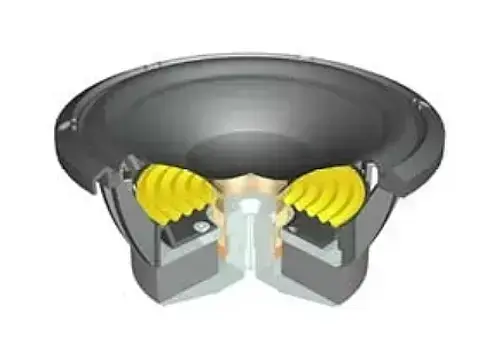
The 6” midrange driver in the GT3 HD is specially made for the GT3. The ML150 has a unique alloy cone that Atohm says is much better at keeping its rigidity than paper or other plastic cones. This allows the ML150 midrange driver to handle a frequency range from 180Hz to 2500Hz. This is a lot of musical information for the midrange driver to cover, so it needs to be both rigid and controlled in its response.
This driver has no dust cap; instead, it is fitted with a phase plug that helps with phase and directivity. The coil length for this driver is also reduced to 10mm, which allows the rated sensitivity of this driver to be at a very good 94dB. In my listening, the ML150 driver covered its wide frequency range well and had good detail while keeping things smooth and even.
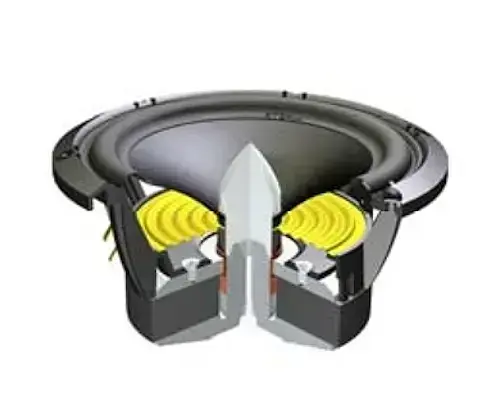
The LD180 7” bass driver was also solely designed for the GT3-HD speaker. This driver shares the same alloy cone construction as the ML150 midrange, which allows for a more natural transition between them. The GT3-HD uses two drivers, from their rated lowest bass point to the 180Hz crossover point to the midrange driver. This driver features an 11mm maximum extension and eight strategically placed holes in the base of the cone to maximize decompression of the core and coil cooling while minimizing flow noise. All this technology results in a bass driver that can reach high sound levels with low levels of distortion and compression.
CROSSOVER
The crossover is an essential and often overlooked part of a high-end speaker. Most people overlook it simply because they cannot see it or do not understand what it does or how it works. Through years of research and lessons learned from their earlier designs, Atohm designed the crossover in the GT series with what Atohm calls ““temporal calibration cells (delay line).” This time domain correction allows Atohm to use 1st order filters in the treble range. This allows gentle slopes to be used in the crossover, which causes fewer issues with phase rotation and reduces group delay.
The gentle 6dB per octave slope of the crossover also allows Atohm to add separate “cells” that control any phase or response issues with notch filters or impedance compensation networks. I like that Atohm uses lower-order filters with their design, as anyone who has worked with crossovers will tell you that the more complex and higher order you make your crossover filters, the more phase and impedance issues will creep in and cause problems.
This is also a testament to how well they designed their drivers, as many speakers on the market use high-order filters to keep cone breakup or other driver-focused issues from appearing in the final response. In my experience, a high-quality driver made with today’s technology or know-how should not need aggressive filters or high-order crossover networks to hide cone breakups or issues caused by the driver.

One of Atohm’s most remarkable features is its tunability. The crossover features a tweeter and midrange level control that allows the user to “tailor” the response to either their room or their sensibilities. This is an excellent idea that has been lost over the years.
Speakers back in the 70s and 80s used variable L-Pads that could change the level of the tweeter or midrange. But these variable L-Pads played hell on the signal integrity and generally would do more damage than good to the music signal. Atohm’s approach is different. They use high-quality resistor networks and multi-way switches, allowing you to switch the output levels of tweeter and midrange drivers. According to Atohm:
“The GT3 column speaker features two switches with three positions: the first switch is for frequencies ranging between 500 Hz and 2.5 kHz, and the second one is for frequencies between 2.5 kHz and 30 kHz with intervals of 2 and 3dB, or a maximum of 5dB amplitude adjustment. In total, the GT3 can offer 9 different frequency responses”.
The 6db crossover networks used in the GT3-HD mean that the changes made by these switches are gradual and cover a broader range of frequencies than most contour controls. This allows these differences not to be so drastic and will enable users to control how the speakers sound in their room gradually. This is impressive, as Atohm added these features without resorting to cheap, lower-quality parts or methods. In practice, I could hear the differences between the settings and spent much time finding the best ones for my room.
My room has excellent reverb characteristics and is well sorted, so in the end, I found the stock “linear” setting gave me the best performance. Considering where speakers are placed in today’s homes, having these controls is something more companies should look into, but only if they are implemented in a way that does not disturb or take away any of the crossover functions, clarity, and detail.
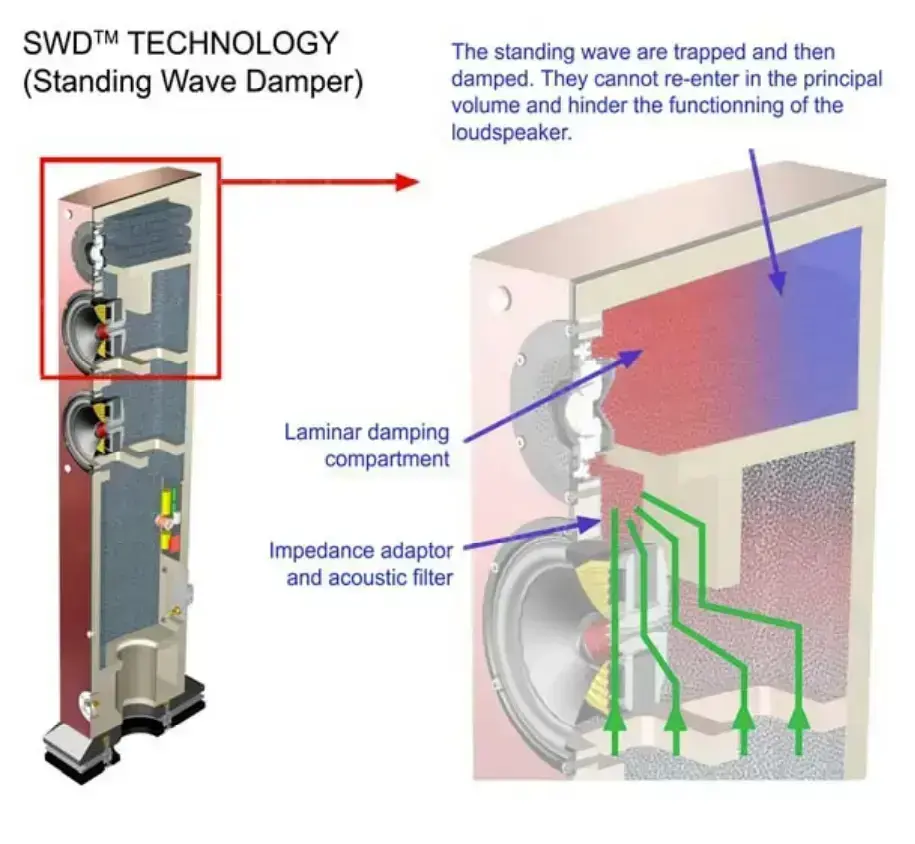
The enclosures on the GT3-HD were carefully designed and tested and incorporated technologies to keep its behavior from disturbing the delicate frequency response or causing any resonance. The top part of the cabinet is treated with laminar damping material that traps and then dampens out any standing waves. However, the air flowing into this chamber must go through an acoustic filtering damping material applied in a measured quantity to cancel out any reverberation built up in the cabinet.
The cabinet behind the midrange driver is treated to what Atohm calls its PRD(Progressive Rear Damping). The midrange, first and foremost, is in its enclosure; this keeps the midrange isolated from any pressures or resonance from the woofers. The back panel on the midrange enclosure is cone-shaped and lined with damping material.
This dampening material is increasingly compressed with depth into the cone, which prevents any standing wave from returning to the midrange cone. This is an essential part of this design. The midrange is the heart of the music, and the part most people are the most sensitive to issues. Standing waves, resonances, or frequency response anomalies will stand out like a sore thumb.
In my review, I noticed the midrange was very detailed and clean on the GT3-HD. This shows that in speaker design, everything matters. This includes anything that can be done to keep the drivers working perfectly and the enclosure from changing that fact or adding anything themselves.
At the bottom of the cabinet is the Atohm symbol, another feature of these speakers. But this “symbol” is not just another badge showing the company that made your speakers. This is a removable cover for the sand compartment in the speakers’ base. This compartment holds up to 4 liters on dry sand to help anchor the speakers to their position and to help stamp out any vibrations in the cabinet. Of course, these being review samples with a limited time in my system, I did not want to risk damage or the mess of cleanup, so this feature was not tested in my review.
The bottom of this cabinet is also where the bass port is for the GT3-HD. This is a bottom-firing port that exits out of the bottom plinth of the cabinet. This allows the port to exit from all four sides of the enclosure equally and should make positioning easier in most rooms due to the port’s air forces not being directed to any one side of the speaker.
Also, for positioning flexibility when proximity walls cannot be avoided, a port plug is included that will allow a little tighter bass tuning. Sometimes, you will lose a little low bass extension, but the bass will tighten up and sound more musical when the speakers are placed near a wall.
PDS or Progressive Damped Spiking is a technology that Atohm devised to isolate the speaker for the floor so that little to no energy is transferred. Two braces connect the main speaker cabinet to the plinth. Energy is passed through these braces and into the plinth only to return through the secondary spikes that are a part of the central spikes that contact the floor.
When the speaker is placed on the floor, the speaker’s weight compresses the braces just enough to contact the secondary spikes, which will dissipate any vibrations back into the cabinet and not the floor. In my testing, I noticed no issues with floor vibrations or any transferred energy in my measurements or listening.
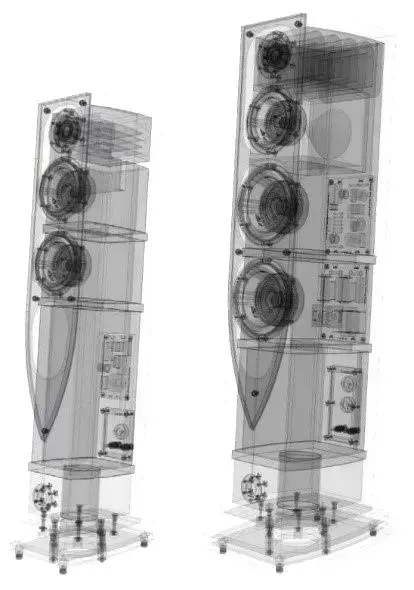
The GT3-HD cabinets are made of high-quality MDF. The curved side panels are formed using multiple layers of 3mm wood and fixed in a curved mold until the glue sets. Then, they are precision machined to create the final cabinet shape.
A laser vibrometer tells them where to place cabinet supports for the best vibration and resonance control. The finish options for the GT3-HD are white piano, black piano, and rosewood piano finish(my review samples were the rosewood veneered finish and were impeccably finished).
When I was reviewing the GT3-HD, everyone visiting my home complimented them on their very well-finished exterior and design characteristics. Once I showed them some of the technologies in the design, they praised the GT3 for its elegance but also that it looked like a well-appointed speaker and not some over-the-top odd-looking design that only eccentrics and complete audio nerds would like. The GT3-HDs are very well built, and their finish is expertly done.
The grills are not generally something that gets much attention in speakers and is primarily a simple cover with either a pin lock or magnetic holder holding them on. Atohm takes this idea one step further by offering two different options. The main grills are a simple cover with a hidden magnetic holder. They end at a point on the bottom of the grill, which gives the grill a cool appearance. Many people will take the grills off for serious listening or never put them on in the first place.
This is mainly because no matter how acoustically transparent the grill cloth claims to be it will affect the audio. Atohm gave a second option, individual metal, and cloth-covered covers, to each midrange and bass driver. Not only does this allow for a different appearance, but also, with the tweeter already having a metal mesh protective cover built into the tweeter front plate, this option allows nothing else between the tweeter and the listener.
Like with every speaker review, I do my listening without any grills in place. I applaud Atohm for offering two different options for folks who don’t want to look at the raw drivers in their speakers or have children or pets that will venture too close and could damage the drivers.
Far too many high-end audio companies are contracting their cabinet building to Chinese factories with no vested interest in how well these cabinets hold up or if they meet the acoustic standards of the leading company. When that mentality is used, the quality will suffer. This is why a few high-end speaker companies finally pulled their heads out in the last few years and started building their cabinets themselves again.
Atohm makes their speakers from start to finish because they have the vision and the most to lose if the quality is not there. I am glad to see Atohm keeping manufacturing local. It makes for a better overall product and gives people who live in those areas another employment opportunity they would not have if the manufacturing were contracted elsewhere.
Performance
Like any speaker I review, I take the time to make sure the speakers are broken in(I know, controversial) and make all the adjustments needed to get the most out of them. For the most part, the GT3-HDs were straightforward to get ironed out. The speakers were toed out about 12 to 15 degrees, giving the best soundstage width and imaging accuracy combination. The speakers ended up about 8.5’ apart and about 4’ from the front wall. Which also gave me the best bass definition while keeping the soundstage deep.
While these speakers are relatively thin by design, they are pretty tall, which made me worry about tweeter height and listening position. But all was good, as it seems. Atohm knew this in making their design, and the speakers sounded nicely balanced, even though they are taller than I usually have in my room.
When I first sat and listened to the GT3-HDs, their performance put me off. I was using my Pass Labs X150.5 power amp and Hegel P20 preamp. For some reason, that combination did not sound natural and made me pause. But when Emilios Mandalios from Audio Excellent followed up the GT3-HD with an Atoll Int300 (review coming!) for me to try as well, my mind was changed. While my Pass/Hegel combo did not match well with the GT3-HD, the Atoll Int300 seemed to be perfect for them.
Graveyard’s new 2024 album “6” is an album I have been waiting for. This Swedish band’s songwriting ability and playing style have always impressed me. With the album “6,” they slow things down and draw from their 60s and 70s inspirations from bands like The Doors and other rock bands from that time. Every song tells a story and is inviting to listen to(if you are a stoner rock fan like me). I listened to this album several times with the Atoll/Atohm GT3-HD combo and liked what I heard. The bass was tight(not as tight as my open baffle but good) with good impact and great depth. I would not think users of the GT3-HD would ever need subwoofers unless you are just a bass head. I ran measurements in the room, and I got 25hz solid bass in my room with the GT3-HD. For two 7” woofers in each cabinet, that is impressive.
I took this in-room frequency response measurement when I got the speakers in their final position. You can see that the bass performance is impressive for a slim tower speaker with no subwoofers. Also, from 1k and up, you could not ask for a smoother and more linear response in a room.

There are a couple of dips, one at around 700Hz and another at around 280Hz. However, seeing the phase performance around those areas might be room-related. Also, most 3-way speakers have more complex crossovers and can sometimes show phase-related anomalies around the crossover points. Otherwise, this is very close to a textbook response and one of the better in-room responses I have seen posted on a commercially available speaker in a while.
I have seen a trend in some speakers bumping the midbass up or boosting the presence region, trying to get a more expressive sounding. Still, to me, the added midbass or boosted treble does nothing but cause either listening fatigue or a sense of unnaturalness in the bass. I had to mention this because it is refreshing to see a speaker that measures well in the room and has a straightforward design. It’s just a good design that is tuned well.
I understand some speaker designers “tune” their speakers for a specific response, and I have been guilty of doing that myself in some of my speaker designing and building. Some designers will tune in some variability for room conditions or to smooth out an area many feel needs to be deemphasized. But the Atohm does none of that and just stays to good engineering and a measured frequency response that is quite good.
Christoffer Moe Ditlevsen is a composer that everyone needs to hear on a good system. His recordings are great, and his writing is stellar for the type of music he makes. The album Midst of Life has to be one of my favorites. It is a short three-song album, and the songs themselves are short, but the amount of enjoyment I get from listening to them is enormous. On the Atohm GT3-HD, all of the detail were there. The cellos had good authority in the room, as they should on these tracks, and the violins also showed their stuff. The bass was deep and impactful while the treble was smooth and musical.
The Atohm-designed soft dome tweeters are good, not beryllium or AMT/Ribbon levels of detail, but I could listen to the GT3-HD all day without any worry about fatigue. With audio, there are always tradeoffs. You either pick the most intensity at the expense of the fatigue factor. This is where Atohm’s tweeter falls in. It serves you a good dose of musical accuracy and transparency but serves it to you in the most comfortable and silky way possible.
As I have gotten older, I have consistently chosen the latter. I have listened to these tracks with my reference, highly modified Spatial Audio open baffle speakers, probably hundreds of times. In comparison, the Atohm’s presented the performance much differently.
The Atohm’s are the more mannered and gentlemanly of the two, serving up slightly more control. But my Spatial’s have dynamics for days, and let me hear every level change from the instruments. The Atohm’s went lower in the bass, but I cheated with my REL with the Spatial’s, so that is a wash.
But in the midrange, I heard magic from the Atohms. Driven by the Atoll INT300, the GT3-HD had a fast, incisive, and natural midrange. The ML150 midrange driver is by far the star of the show. The strings sounded fantastic on the Atohm’s driven by the Atoll. On other tracks I tried, the vocals sounded crisp, with great leading and trailing edge detail, and without any sibilance. It is quite something when you hear crystal clear word pronunciation in the vocals that show every breath and detail of the voice without darting into sibilance when things get loud or the vocals go falsetto.
I wish it had worked out with my reference Pass Labs/Hegel combo, but it was not to be. (what does this imply? (editor). My reference modified Spacial Audio’s have great vocals and string transparency, but this is one area in which the Atohm’s took center stage. Midrange clarity and detail are paramount to delivering an enjoyable and accurate experience in music.
As far as choosing one or the other. I think both my Spatial’s and the Atohm get many things right with this music. They are both accurate, have good imaging and sound staging, and have great bass energy and detail. And again, where the Atohm takes it home with a killer midrange, But the Spatial’s bring that high sensitivity and effortless dynamics that large open baffle drivers bring, and it is hard to ignore. So, all in all, I believe both are right, and both win for different reasons.
Conclusion
I thoroughly enjoyed my time with the Atohm GT3-HD and think it is a well-designed and built speaker. If you read their technical bulletins like the one There is no doubt that Atohm knows speakers and how to design them. They keep their designs simple and elegant, with excellent finishes and grill options not found on other speakers.
They make their drivers, so they have more ultimate control over the drivers they use. The crossover designs are unique in that you can tune the midrange and tweeter by a few dB to help with any room issues or preferences.
While I did try this out, and it worked flawlessly, ultimately setting the controls to the stock positions gave me the best sound in my room. I did not know what to expect when I asked to review the Atohm speakers at Axpona this year, but I am glad I did. In my opinion, if you are in the market for a floorstanding speaker in the price range of the GT3-HD, I recommend you hear them if you can. They perform well and might be just what you have been looking for. Highly recommended.

Review System: Speakers: Spatial Audio M3 Turbo S open baffle./ REL T9x subwoofer/ Digital: Denafrips Venus II, / Modified PC-based Music server/streamer. PS Audio Airlens Network Streamer Analog: Pro Ject X2 B Turntable, Darlington labs MP-7, and SU-7 phono preamp, Audio Technica AT33 PTG/ii cartridge Amplification: Hegel P20 preamp. Pass Labs X150.5 power amp. Conditioner: PS Audio Quintet. Cables: Iconoclast Series 2 SPTPC speaker cables,IconoclastGeneration 2 ETPC XLR cables and Gotham 4/1 RCA interconnects, Iconoclast BAV REL subwoofer cable
PRICE: $13,000
Email: contact@atohm.com
Website: www.atohm.com
North America distributor:
Emilios Mandalios
Audio Excellent
Phone: (847) 774-4619 Email: info@audioexcellent.com
THE SOUND ADVOCATE
WHERE the MUSIC BEAT meets the AUDIOPHILE ELITE ! SUBSCRIBE BELOW!
Thank you for subscribing.
Something went wrong.



Wonderful review, Doug. I too applaud the use of 1st order filters and selectable driver resistance to tailor freq resp. AtOhm’s tweeter “boost” appears to be +3dB from the graph…which seems a bit “hot”. Rather than possible oberboost I wonder if a more transparent speaker cable might be the Goldilocks fix between a “soft” linear setting and treble overboost? Of course I’m recommending you try my ArgentPur cables (shameless plug) with this Francophile brother! They just might provide that pellucid clarity and detail without the fatigue sometimes inherent in overcooking the tweeter. Again, a great review combining technical analysis and listening observations in a splendid read. Bravo!