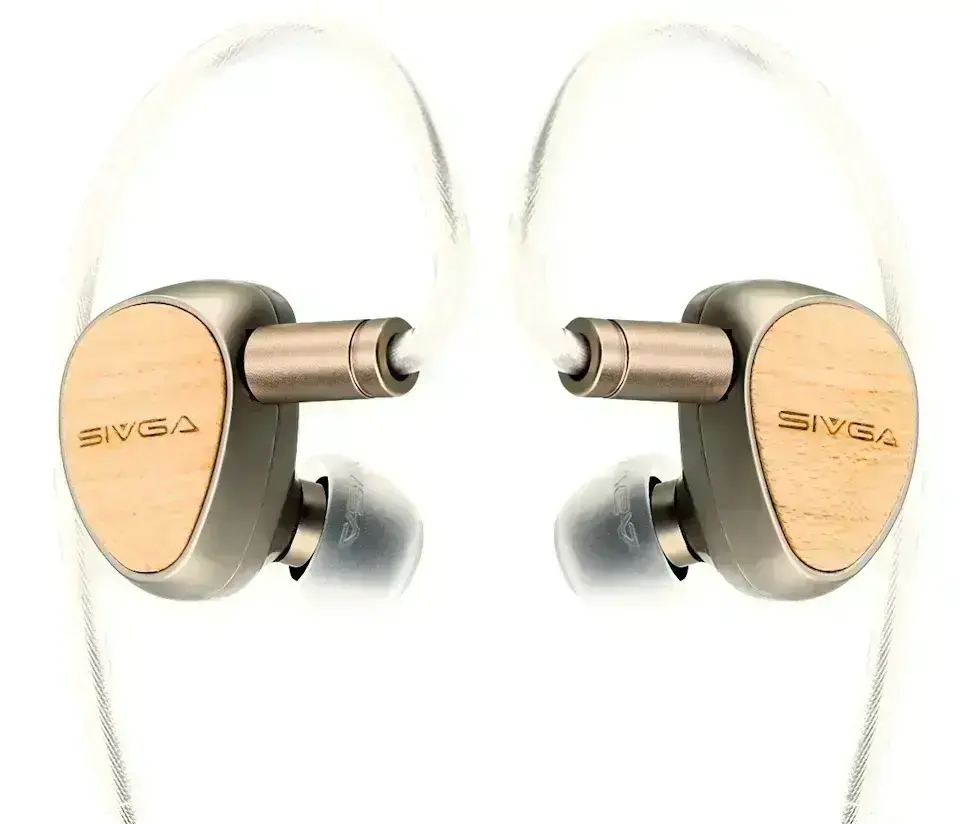
The Sivga Que IEM Headphone is a fine and trend setting affordable headphone for Audiophiles; complete review is below!
One of the recent trends I have started to notice and observe in portable audio is that people will keep their more expensive headphones and IEMs for home use and will use less expensive but well-made headphones for their travels. This makes sense, as who wants to take the chance to get their more costly headphones broken or, worse yet, stolen when on the go? There are many reasons why affordable headphone products exist, and the product I am reviewing today falls right in this class.
I myself was wondering what kind of performance you can get for under $100 in the IEM market, and when SIVGA offered me a chance to review their new Que IEM that retails for around $70, I took them up on their offer, not just for people wanting an on-the-go headphone for travel, but for the folks entering the hobby and needing something affordable.
SIVGA Audio has existed since 2016, and its official name is Dongguan Sivga Electronic Technology Co., Ltd. If you haven’t heard of the brand, you might have heard about its sister company, Sendy Audio. Sendy Audio makes some high-end headphones and IEMs, while SIVGA seems to keep its products in the low—and mid-priced categories.
The Que represents their entry-level IEM that features technologies not featured in many lower-cost IEMs. Lets move on and discuss the build quality, and finally the sound quality to see if the Que lives up to being a good entry point product for the audiophile today!

The box is well decorated and the packaging is finely put together for an IEM in its price class. Having just reviewed the Meze Alba a few months ago I have to say that the SIVGA Que’s packaging is a step above even the Alba, which retails for over twice the price of the Que. Overall, I was left impressed by the attention to detail of the packaging of the Que.
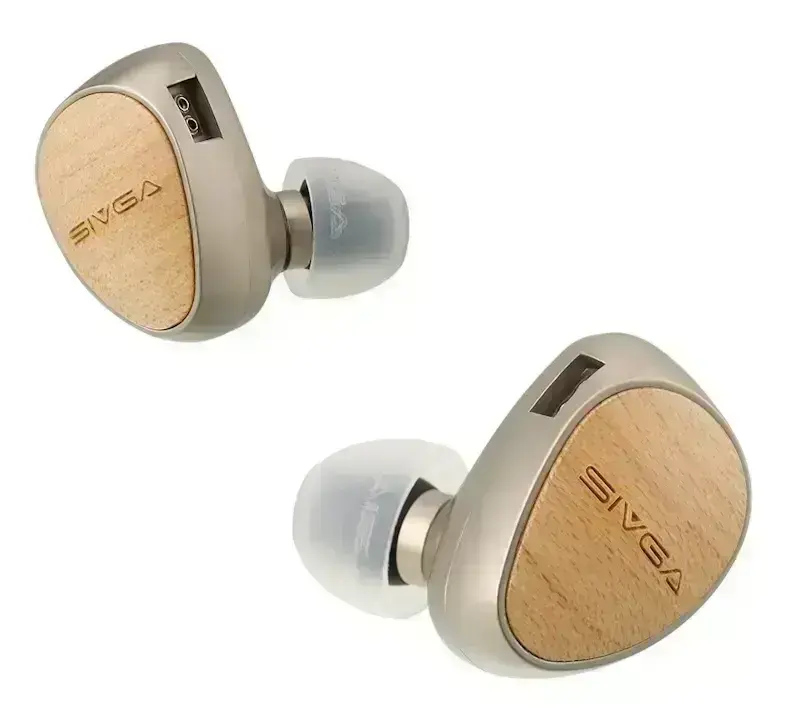
The Que IEMs’ shells are made of die-cast zinc alloy, which SIVGA says is more durable and stable than the polymers and plastics used in most affordable IEMs at this price level. To give the Que an upscale appearance, SIVGA added some cool real wood panels made from white maple wood from North America. It gives the Que a cool appearance without adding much weight or taking the look in a weird direction like many IEMs seem to do.
The connections on the Que are standard two-pin connector types with a heavy gauge cable for the price that is a silver-plated copper cable. While I know some people will appreciate this silver-plated cable, others will say it is unnecessary for good audio production.
For this review, I used the stock cable and thought it performed well for a device in this price class. The cable seems well made and it is much thicker than I figured you would get at this price. In my testing of the Que, the cable worked perfectly. The nozzles are also well made, allowing me to slip my desired tip onto the Que without any issues.

The 10mm Beryllium-plated driver is the star of the show for the Que. This is a single magnet dual-cavity design, and while the benefits of beryllium are well known, they are rarely seen at this price. To put it into perspective, this driver is coated with beryllium but is not a pure beryllium diaphragm driver. A pure beryllium driver would be much too expensive for use in a headphone at this price level, but coating an existing material in a beryllium deposit is a more affordable way to get most of the benefits of beryllium without the costs of a pure beryllium unit.
SIVGA says this driver improves stiffness and stability and resists vibrational distortion and standing wave distortion better than other materials. It is refreshing to see a company focus on making an affordable IEM and doing so with one really good drive
SIVGA says this driver improves stiffness and stability and resists vibrational distortion and standing wave distortion better than other materials. It is refreshing to see a company focus on making an affordable IEM and doing so with one really good driver.
Most of these inexpensive multi-driver products seem to suffer from problems related to the crossover network within them. And this gives the sound an unnatural presence. It is good that SIVGA decided to stay with one good driver in the Que.
Sound
For my first listen with the Que, I connected them to my trusty IFi Hip DAC, which I use when listening on the go or around the house. This is, in my opinion, a good test for these headphones.
The Ifi Hip DAC is a top-rated product and represents an excellent example of a high-quality yet affordable DAC/amp that is well-designed. My sources were my Dell XPS 13 laptop and my Samsung Galaxy S22 Ultra Smartphone. The way I see it, these devices represent good examples of the types of devices that the Que will most likely see in the real world. So, testing with these devices made perfect sense.
The first thing I tested for in an affordable headphone product was the response’s peaks and valleys. These are not the tiny changes you see in the frequency response on a graph but major omissions or boosts at specific frequencies that will immediately cause issues with long-term listening. I have heard entry-level products that have severe design issues and will immediately show up for a seasoned listener. The Que had none of these issues! They sounded well-balanced out of the box and did not show any glaring issues with their response.
I tested on the Que an album called Baroness’s new Stoner Metal album, “Stone.” This is a fairly well-recorded album that, minus the mistuned low B string on the bass in the song “Last Word”(sometimes being a musician too is a curse), is a great album to both listen to and test new headphones with. On bright or non-forgiving headphones, this album can sound very grating, causing most listeners to fatigue very quickly.
The Que did not do this; looking at their frequency response available online, I saw that the Que is tuned somewhat close to the Haron target with a boost starting around 400Hz down to the lower bass. This gives the Que a warm and forgiving nature that gives this type of music some warmth.
Although this added warmth is a departure from absolute neutral, the warmth and midbass boost is what some people look for when they want a silky and inviting listen. While I felt this added midbass warmth robbed me of a little upper-midrange detail, for this price class, I felt the sound had good control.
Immanuel Wilkins’s new album, “Blues Bloods,” is another winner from Blue Note Records and Immanuel Wilkins. I have always enjoyed his music for its inventiveness and the care they take with recording and mixing these albums. Even though this album is brand new, I have been listening to it on all my systems as it is a very well-put-together album. On the Que, this album takes on a darker, mellow sound.
The midbass boost is heard here and is sometimes overbearing. This can be easily fixed with EQ and is very easy to do but I also know people that either choose not to or believe EQ gets in the way and should not need to be used in a competently designed headphone. I agree with both of these, as I think a well-designed headphone should not need EQ to sound good. But, and this is a big BUT, everyone has different ear shapes, and each person’s ears have a different frequency response.
The head-related transfer function is a real thing that affects how the sound goes from the driver into our ear canals and to the eardrum. So in my opinion, it does not surprise me when some listeners require EQ to compensate for either a deficiency or a boost in their hearing.
Other than the Que sounding a little too sultry for this album, the detail I heard was good for this price level. The imaging was focused, and while the soundstage was not the best I have listened to, it is a good representation for this price class.
Dynamics were also good at this price level. The midrange and treble were engaging and smooth but without EQ to correct for the elevated bass it gets lost in the warmth. This shows that the Que is a rather good candidate for people who use EQ.
Some headphones and IEMs just will not do well with EQ at all. They either dynamically compress, or the EQ adjustment causes added resonances or other issues with the response. That is not the case here. I used the ToneBoosters parametric equalizer built into USB Audio Player Pro to make gradual and meaningful adjustments to lower some of the midbass boosts.
When I did, the bass became tighter, more focused, and detailed. Also, the bass seemed to integrate better with the rest of the frequency band. So, for those wondering if the Que can be “tailored” to your tastes? I can confidently say that, for the most part, it can. But to put things into perspective the driver on the Que is slower than drivers in more neutral IEM and I believe this adds to the warmish sound; but I will reiterate that for the $70 price class, there is a lot to like here.
Another aspect of more affordable IEMs is how they handle dynamics and louder passages. Playing tracks like “Queen Mary” from Francine Thirteen will test the “Metal” of any headphone. With this track, the bass is deep and loud, making some headphones and IEMs fall on their face. With the Que, it took all that I threw at it with this track and asked for more.
The Que gave me all the bass I wanted without any compression or distortion at any sane volume. This is impressive and shows that while the Que might need a little EQ help to get the most out of it for some people, it is a well-made and put-together IEM.
Comparisons
Since I reviewed the Meze Alba just a few months ago, and it is also priced somewhat affordably, it would be a disservice not to compare the two. And I must admit the sound of the Abla took me by surprise! It offers a good dose of higher-end sound while remaining affordable. Comparing it to the Sivga Que was interesting as the respective balances are much different.
The Alba has bass but, it depends on the partnering equipment it is tight, dynamic, and rock solid. The Que in stock form is much slower, warmer, and less detailed. After the EQ adjustment on the Que, things got a little closer. The Que cleans up in the bass after EQ and then becomes much closer to the Alba. The Que and Alba both share a good midrange, but the faster driver in the Alba will give a little more transparency. This is amplified by the lower midrange and bass being boosted too much on the Que.
Soundstaging is an area where the Alba wins handily. The Alba has a “port” on its body, a driver air pressure relief that also seems to assist with the soundstage. If the music calls for it, the soundstage can go outside my head, much like an open-back headphone can. In this area, the Que can’t keep up in the soundstage department and sounds more restricted to the head. But imaging Is good on both headphones.
The weight is another aspect of the comparison that is not sound quality directed. The Alba weighs 14 grams while the Que is 20 grams. This does not sound like a lot, but to me, it could be felt. Both IEMs wore fine walking around while listening to music the Alba was more comfortable to wear for long periods due to the weight.
Conclusion
I have enjoyed my time with the Sivga Que. Once again, I am surprised at what you can get for the money in headphones today. No, the Sivga Que is not perfect in tuning and does require a little EQ to get the most out of it. But I have heard people say that about some $1,000 headphones, So as long as you are willing to EQ a bit, great sound can be had for less money.
Without EQ, the bass is a little too much for good balance, but bass heads should be proud. The build quality is excellent, and the wood accents give it an upscale look that most affordable headphones simply don’t have. There are many fine products in the affordable audio price range, and it would be impossible to hear them all. But I will say this: if you know the limitations of the Sivga Que – understand that you will need to work with them to get the most out of them.
I can firmly recommend trying the Que. It is a well-designed and built headphone that uses much of today’s technology to improve performance. For the price, they would also make a great travel companion for folks wanting to leave their expensive IEMs safely at home.
Review System: Speakers: Highly Modified Spatial Audio M3 Turbo S open baffle With custom Horns/ REL T9x subwoofer/ Digital: Denafrips Venus II, / PS Audio Airlens Network Streamer Analog: Pro Ject X2 B Turntable, Darlington labs MP-7, and SU-7 phono preamp, Audio Technica AT33 PTG/ii cartridge Amplification: Hegel P20 preamp. Pass Labs X150.5 power amp. Conditioner: PS Audio Quintet. Headphone Gear: IFI HIP DAC, rotating headphone Cables: Iconoclast Series 2 SPTPC speaker cables, IconoclastGeneration 2 ETPC XLR cables and Gotham 4/1 RCA interconnects, Iconoclast BAV REL subwoofer cable
Email: market@sivgaaudio.com
Dongguan Siweijia Electronic Technology Co., Ltd Address: Juhui Egu High-tech Industrial Park, Liaobu South China Industrial Park, Dongguan City, Guangdong Province, China
https://www.aliexpress.us/item/3256807067025278.html
Price: $69.90
Specifications:
- Driver unit
10 mm beryllium diaphragm dynamic driver unit with a strong magnetic structure
- Material
Maple wood from North America for the rear chamber panel, and copper that has been refined to remove impurities and oxygen
- Cable
0.78 mm 2-pin changeable cable design with Litz braiding
- Technology
Single-magnet dual-cavity technology and zinc alloy nozzle and ventilation holes
- Design
Ergonomic design using 3D data for different ears, and around-ear cable design
THE SOUND ADVOCATE
WHERE the MUSIC BEAT meets the AUDIOPHILE ELITE ! SUBSCRIBE BELOW!
Thank you for subscribing.
Something went wrong.


