Budget Audio meets high end Reference system; Not Outclassed, Just Outgunned!
In the audiophile world, some might ask: Does more money buy better sound? What happens when 1979 Chicago-built speakers powered by budget tube gear face off against Italian reference floor standers and state-of-the-art amplification? It’s like comparing Bill and Ted’s phone booth to the DeLorean. Both travel through time, but most would likely choose the DeLorean; however, the phone booth has a charm and directness that shouldn’t be dismissed.
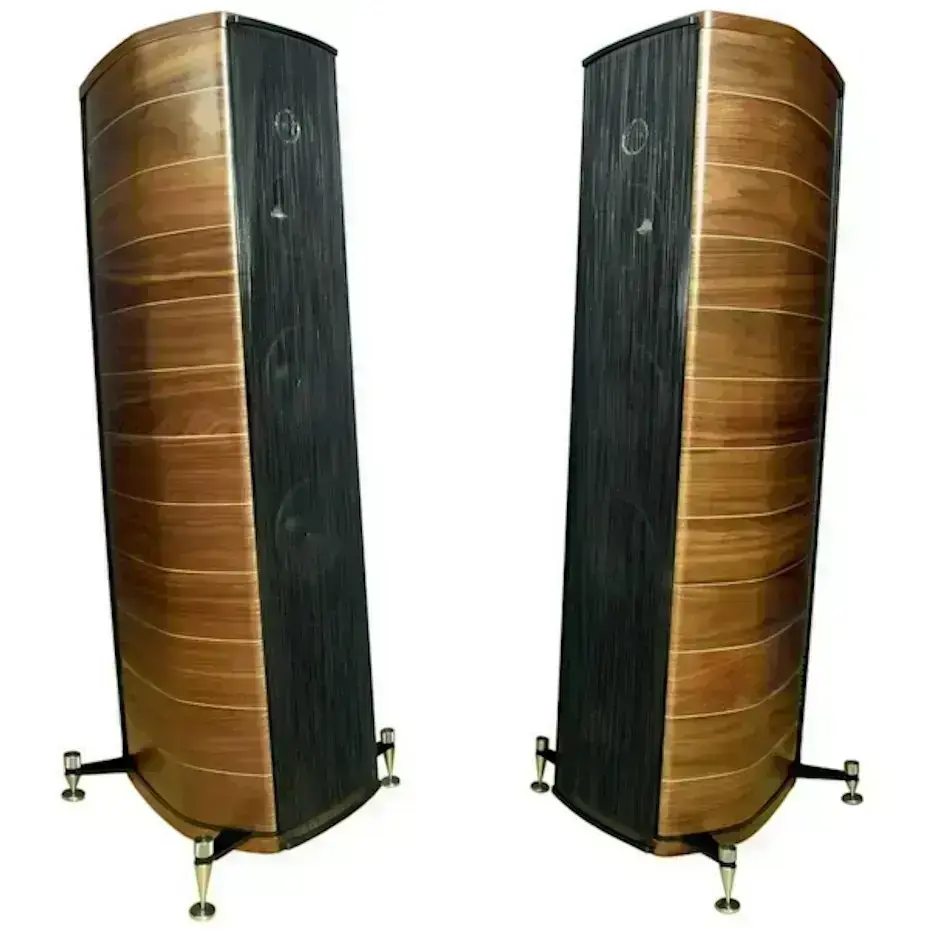
We pitted a high-end reference chain—Sonus Faber Olympica 3s , Audion monoblock amplifiers, and Anthem STR preamp (the DeLorean: sleek, engineered, requiring serious investment/plutonium)—against a scrappy vintage hybrid pairing featuring Allegro Zenith 1000 speakers and a Reisong A10 tube amp (the beloved phone booth: stripped down, yet delightfully functional). To have some fun, we put the two systems head-to-head to see what differences we heard through nine carefully selected tracks spanning jazz to metal.
The Contenders: Budget Underdog vs. The High-end Reference System
The Reference System (the DeLorean) represents one pinnacle of audio engineering: Sonus Faber Olympica 3s (three-way, 35Hz-35kHz, 90dB sensitivity, 4-ohm, 77 pounds each), AGD Audion monoblocks (200 watts at 4 ohms using revolutionary GaNTube technology, 120dB dynamic range, weighing just 6.5 pounds each), and an Anthem STR preamp (Anthem Room Correction, which is awesome (!), 120dB signal-to-noise ratio, 0.0006% THD). This is sleek, engineered precision.
The Budget Underdog (the Phone Booth) costs a fraction of that investment (I got them from my parents’ garage): 1979 Allegro Zenith 1000 bookshelf speakers, (6.5-inch woofer, 3.5-inch horn tweeter, crossover at 2500Hz, 8-ohm impedance, 88dB sensitivity, 40-watt power handling, measuring 20.5 x 13.5 x 7.25 inches) and a Reisong A10 tube amp (6 watts per channel from EL34 tubes in single-ended Class A operation, 100k ohms input impedance, 20Hz-20kHz frequency response, weighing about 22 pounds). It’s unpretentious, direct, and serves its purpose.
Decoding Audiophile Language Through Nine Essential Tracks
Understanding terms like “rich midrange,” “tight bass,” and “sweet treble” requires focused listening. It’s always a good idea to reinstate some basics here, even for the experienced Audiophile and listener. Let’s summarize what to hear across specific test tracks:
Midrange (250Hz-4kHz)—The Heart of Music
The midrange is where vocals and most instruments live. When people say “rich midrange,” they mean vocals sound full-bodied, warm, and present—not thin or recessed. Listen for vocal texture, breath, and how instruments like acoustic guitars resonate. Does the voice feel centered in the mix? Can you hear the natural resonance of the instrument bodies?
Norah Jones’ “Don’t Know Why” and Alison Krauss’ “A Case of You” are perfect for this assessment. Pay attention to how the vocal sits in the mix, the clarity of any acoustic instruments, and whether you sense the artist’s presence and intimacy. Listen for the naturalness of tone and whether the midrange feels warm and inviting or thin and distant.
Bass Control—The Foundation
“Tight bass” means each bass note starts and stops cleanly—no overhang, no muddiness. Think of a kick drum: tight bass sounds like a sharp “thwack,” while loose bass sounds like dropping jello. Can you distinguish individual bass notes even during fast passages, or do they blur together?
Metallica’s “Master of Puppets” features galloping bass lines and double kick drums, perfect for this test. Focus on whether each bass note is distinct and punchy or whether the bass feels bloated and slow to recover. The Eagles’ “Hotel California” tests bass definition with its opening bass line—can you follow it clearly, or does it lose definition during complex sections?
Soundstage and Imaging—The Holographic Experience
Soundstage refers to the perceived width, depth, and height of the musical presentation. Imaging is the precision of instrument placement within that space. Can you point to where each instrument is located? How wide does the stage extend? How deep does it go? Does it feel like a flat two-dimensional presentation, or can you sense three-dimensional space?

Pink Floyd’s “Shine On You Crazy Diamond” is a legendary track for testing soundstage and what audiophiles call “midrange liquidity”—that smooth, effortless flow that makes everything sound natural. Listen for how far the soundstage extends beyond the speakers and whether instruments occupy specific, identifiable positions. Béla Fleck’s “Flight of the Cosmic Hippo” tests instrumental separation and holographic imaging—each instrument should occupy its own distinct space.
Rhythmic Precision and Detail Resolution
Michael Jackson’s “Billie Jean” reveals rhythmic precision and whether the beat locks you in. Can you hear all the little percussive details in the mix, or do they blur together? Does the system make you want to move with the groove, and are hidden layers revealed with each listen?
Treble (High Frequencies)—Attack and Snap

“Sweet treble” is detailed and airy without being harsh or fatiguing. It’s treble that makes cymbals shimmer rather than crash, that adds “air” around instruments without grain or brittleness. Does the treble feel lively and immediate, or is it rolled off and polite? Can you hear cymbal nuance without listener fatigue? We should demand shimmering treble but NO harshness!
Dire Straits’ “Money for Nothing” features Mark Knopfler’s signature guitar work with bright transients and harmonic richness. Listen for whether the guitar attack feels crisp and articulate or smooth and refined. Dave Brubeck’s “Take Five” showcases drums and piano with fast transients—do the cymbals shimmer with detail, and is the piano attack clear and well-defined?
The Showdown: How Each System Performed
Midrange Purity and Vocal Intimacy

On Norah Jones’ “Don’t Know Why,” the Olympicas powered by the AGD monos and STR preamp reveal every breath and guitar body resonance with incredible purity. The reference system’s dedicated midrange driver delivers “reference-quality” clarity and presence. The Allegro Zeniths with the Reisong tube amp add classic warmth and intimacy—slightly less detailed but emotionally engaging with tube magic. It won’t disappoint unless you’ve already heard the reference system.
Alison Krauss’ “A Case of You” further demonstrates this distinction: the reference system captures every nuance with surgical precision, while the vintage pairing delivers emotional connection through tube harmonics and simplicity. Your own experience may emphasize different qualities depending on your listening preferences and room characteristics.
Advantage: DeLorean
Bass Control and Tightness
Metallica’s “Master of Puppets” exposes the dramatic difference in bass control through its galloping bass lines and double kick drums. To my ears, the Olympicas’ three-way design extends down to 35Hz with authority, and the AGD monos control every bass note with precision, even during the fastest passages. Each note is distinct and punchy—nothing blurs even at the song’s most complex sections.
The Allegros deliver warmth and body—their tuned ports help them reach lower than their compact size suggests, and they hold their own at reasonable volumes but start to show their limitations during the most complex sections. The 6-watt Reisong simply can’t grip the drivers with the same authority as 200-watt monoblocks (you could also add subwoofer(s) as I did). However, listeners with different room acoustics or hearing sensitivities might perceive this difference quite differently.
The Eagles’ “Hotel California” tells a similar story: the reference system delivers bass definition with ease, while the vintage pairing works beautifully at moderate volumes but shows some bloom during the most demanding passages.
Advantage: DeLorean
Soundstage, Imaging, and Holographic Space
Pink Floyd’s “Shine On You Crazy Diamond” reveals the most dramatic difference. In my listening space, the Olympicas driven by the AGD monos create soundstages extending beyond speaker boundaries with instruments floating in specific locations. The three-way design, larger cabinet volume, and superior amplifier control work together to create holographic space. It’s a revelation.
The Allegros deliver pleasant but intimate imaging—they work beautifully in the room until you realize what you’ve been missing. Bookshelf speakers have physical limitations that no amount of tube magic can overcome in most scenarios, though room placement and acoustic treatments can sometimes yield surprising results.
Béla Fleck’s “Flight of the Cosmic Hippo” demonstrates this gap clearly in my experience: instrumental separation, dynamics, and holographic imaging all favor the reference system decisively. Each instrument occupies a distinct space with the reference system; the vintage pairing presents them more intimately but less spread.
Advantage: DeLorean
Detail Resolution and Rhythmic Precision
Michael Jackson’s “Billie Jean” reveals rhythmic precision differences. The reference system locks you in while exposing hidden percussive layers—the STR preamp’s 120dB signal-to-noise ratio and ultra-low distortion reveal micro-details you’ve likely never heard. The vintage pairing provides the beat and groove but misses some subtleties, though some listeners may find the vintage system’s less analytical approach more musically engaging.
Advantage: DeLorean
Treble Detail, Attack, and Snap
Dire Straits’ “Money for Nothing” is where the vintage system shows unexpected character. The reference system reveals every string attack with ultimate refinement—prioritizing smoothness and elegance through Sonus Faber’s silk dome tweeter. Each note feels polished and sophisticated.
But here’s where it gets interesting: the Allegros’ horn tweeters deliver snappy, immediate attack without the laid-back politeness of the Italian design. It’s not objectively “better,” but it’s direct and engaging—the vintage pairing’s unpretentious charm shines. That said, other listeners—particularly those with more acute high-frequency hearing or different room conditions—may perceive these characteristics quite differently.
Dave Brubeck’s “Take Five” shows the same pattern in my room: the vintage system’s treble snap and drum immediacy feels lively and present, the cymbals shimmer with directness. The reference system feels more refined but slightly less urgent, prioritizing smoothness over snap.
Advantage: Phone booth!!
Is the Vintage System Good Enough? Or, Did it Get Creamed?
For listeners craving warmth, vintage voicing, and immediate transient response, the Allegro-Reisong pairing satisfies completely. These Zenith speakers were well-built, American-made, and designed when companies prioritized musical sound. Paired with the Reisong’s tube warmth and 6 watts of Class A power, it’s genuinely excellent for apartment dwellers, casual listeners, or anyone into the vintage vibe. It held its own. It sounded good, played music beautifully, and had a charm that specs don’t capture.
The Bottom Line: Two Excellent Journeys
Some chase the elusive extra 10 percent – or in this case, 33 times more amplifier power and exponentially more speaker engineering – and pay accordingly. That’s what you get with a DeLorean: stunning engineering, refined design, and the confidence that comes with serious investment or plutonium. Oh, and those Sonus Faber speakers look like a million bucks!
But Bill and Ted didn’t need plutonium to have an excellent adventure. The phone booth served them faithfully, and we all grew to love it. The Allegro Zeniths and Reisong A10 represent an era when budget speakers were built to last decades and tube amps delivered musical magic without breaking the bank. Together, they create genuinely satisfying experiences that countless listeners have enjoyed for decades.
However, after extensive listening in my particular room with my particular ears, the reference system dominates virtually every meaningful metric. That’s not hyperbole; it’s simply what happens when you compare tens of thousands of dollars’ worth of equipment to something you can get for what it costs to fill up a large SUV with two full tanks of gas.
If you happen to get a ticket because the SUV is too large to fit in one downtown parking space, you’re definitely spending less on the budget system. Anyways… the reference system offers neutrality, refinement, and revelation; the vintage pairing offers musicality and directness.
Remember: your ears, your room, and your preferences are the ultimate judge. Sound is subjective, and the best system is always the one that brings you joy. Finite!!
My Reference System (used for this article:)
Speakers: Spatial Audio X5s
Power Amp: Line Magnetic 503PA Monoblocks
Preamp: Anthem STR Preamplifier
Turntable: Pro-Ject Signature 12
Phono Preamp: Zesto Andros Deluxe II
Innuos Zennith Mk. 2 using DAC in Anthem
Dual Rel 212se’s
Cabling: mostly Schmitt Custom Audio Cables
THE SOUND ADVOCATE
WHERE the MUSIC BEAT meets the AUDIOPHILE ELITE ! SUBSCRIBE BELOW!
Thank you for subscribing.
Something went wrong.