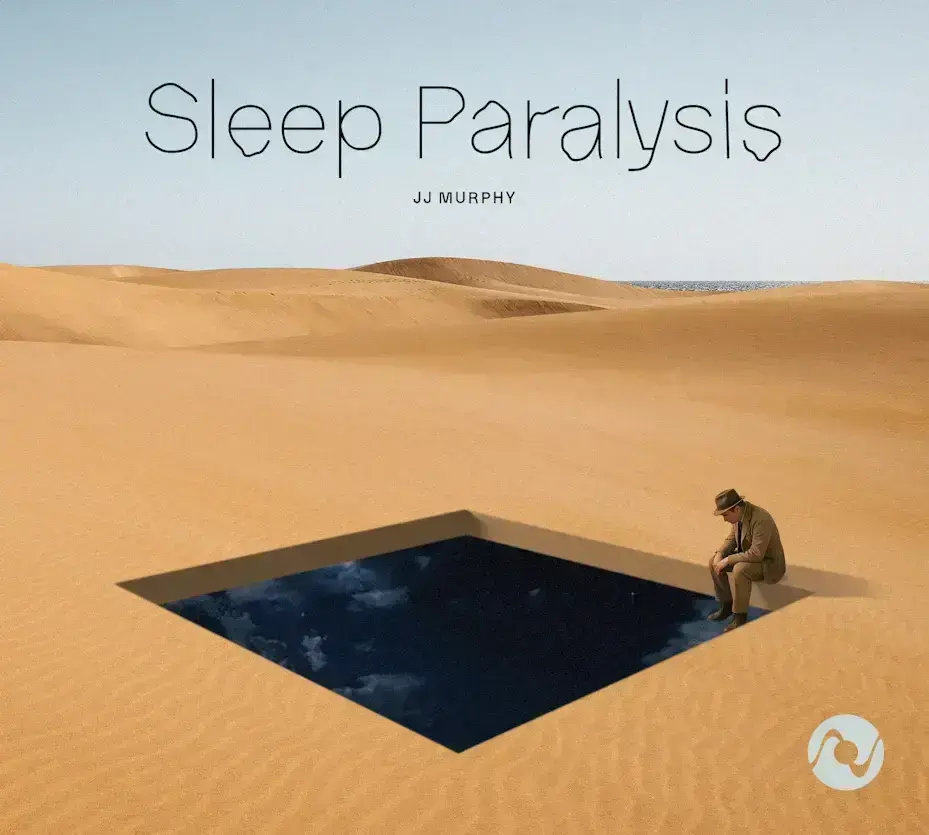
Octave records Sleep Paralysis has recently been released and is fully analyzed by Mack Kahn
Release No. OCT 0070, Octave Records
Released on: January 13th, 2026
Artist: JJ Murphy
Genre: Jazz
According to the PS Audio product page, Sleep Paralysis is described as “a genre-bending odyssey through the American musical landscape. It is a work of JJ Murphy and fellow musicians and yet another fantastic release from Octave Records in Boulder, Colorado,
So, what is “sleep paralysis” and why did the artist pick that name as the title for the Album? In layman’s terms, “sleep paralysis” is when you can’t physically move right before falling asleep or waking up. As you sleep, your brain helps the muscles in your arms and legs to relax. But as you reach a state of dreaminess, with sleep paralysis, you’re stuck between phases of both Rapid Eye Movement (REM) sleep and wakefulness, and your brain’s natural chemicals, there to prevent you from acting out your dreams, keep the body immobilized.
It’s temporary, and most of us have experienced it at some time or another. However, unfortunately, it can morph into a feeling of helplessness and dread for a small percentage of folks that can have a negative impact on their ability to fall asleep, much like feeling anxious before bedtime. So now that we know what the Album Cover means, here’s a bit about it and the artist.
Sleep Paralysis is a high-resolution, genre-blending album released at the start of 2026 by Octave Records. It was recorded using Pure DSD (DSD256) on the Pyramix system. The use of audiophile-grade electronics for mixing and mastering sound, such as PS Audio Aspen FR30 speakers and a PS Audio PMG Signature DAC, among other high-end hardware, was used throughout. From what I have followed, the recording company has the only world-class recording studio to use pure Direct Stream Digital (DSD) recording at an ultra‑high 11 MHz (DSD 256) range via the Sonoma multi‑track system — a technology and process no other major recording studio offers.
The album is available in multiple high-resolution formats: DSD64–DSD512, DXD 24-bit WAV, SACD, CD, and digital. I chose a CD, and this review is based on it.
The music on the album is a mix of jazz, fusion, blues, Americana, and folk, with a strong emphasis on melodic guitar work and improvisation. The tempo is upbeat, and some of the tracks left me toe-tapping as I was writing this review. The music sounds clear with plenty of low end without any muddiness in the midrange. Cymbals and percussion come through with detail and visceral impact. There is no sibilance throughout the recording.
JJ Murphy is a Denver-based guitarist and composer, known for blending modern jazz with cinematic and folk elements. Murphy has performed with notable artists including Natalie Cressman, Todd Smallie, Shawn Eckels, Ryan Connors, Ivan Neville, George Porter Jr., and Chali 2na, and has appeared alongside guitar legends Bill Frisell and John Scofield. His style is described by Nashville producer Ryan Connors as “the blues-inspired rawness of Eric Clapton with the jazz vocabulary and sensitivity of Bill Frisell.” He has also been praised by Dave Abear (Melvin Seals and JGB) for making him “fall in love with blues and slide guitar all over again” In short, a gifted artist!
Album Concept
The concept behind the album is the artist’s metaphorical analogy of the album to the actual “sleep paralysis,” equating it to a musical composition of structure and improvisation, reality and dream, tension and release. In Murphy’s own words, the album can be described as “tripping on your own brain chemicals” — a surreal, subliminal experience that feels like you’re on the verge of discovering something profound. The musicians do a great job in bringing this to life and shifting between tightly composed melodies and free improvisation, much like the push-pull of paralysis and awakening among humans.
Drawing Parallels between Art and Science
Paralysis vs. Flow: Just as the body is frozen during sleep paralysis, Murphy’s compositions often hold a suspended, tense atmosphere before breaking into fluid improvisation. The music on this CD offers a sound system to showcase its ability to deliver low-noise, high-dynamic amplification with well-matched, low-distortion speakers that can handle both the quiet, static “paralysis” and the explosive “flow” without compromise.
For example, track 2, Millennium, is an eclectic mix of drums, bass guitar, Hammond, clarinet, etc., that remains one of my favorite tracks for testing system dynamics and low end. You will find prodigious amounts of bass on the track. Think of the track as representing the frozen moment of sleep paralysis — that strange pause when your mind is awake, but your body won’t respond. It’s like being stuck in a loop, unable to move forward. The music itself feels repetitive and hypnotic, almost like time is circling back on itself. Instead of flowing freely, it holds you in place, echoing the sensation of being trapped between sleep and wakefulness.
Dreamlike State: The condition’s hallucinatory quality parallels the album’s cinematic, surreal textures. Octave Records has done a marvelous job recreating a three-dimensional sound field that happens to mirror the way our brains process real-world perception.
The recording features layered soundscapes where multiple instruments and effects are positioned in a virtual 3D space. Track 1, Valentine’s Day, is a swirling masterpiece of various instruments blending in a delightfully tuneful manner to give a feel of the gentle drift into sleep before paralysis sets in. It represents that calm, dreamy stage when your body is relaxed, and your mind is just starting to slip into another state.
The sound is warm and soothing, almost like a musical lullaby. It eases you in, creating a soft, dreamlike mood that mirrors the peaceful entry into sleep before the strange immobility of paralysis begins. Similarly, track 3, As Time Spins Away, which is a longer, flowing composition (Discogs), could parallel the disorientation and time distortion reported in the medical condition.
Threshold Experience: Both the medical phenomenon and the album explore being “in between” — between sleep and wake, tradition and innovation, control and freedom. A good system should offer faithful reproduction of the “in-between” sound, just as the brain’s sleep-onset period is a gradual, layered shift between wakefulness and slumber.
By “in between”, it is meant that it should reproduce subtle transitions in music — the fade-in of a new texture, the subtle harmonic shift, the breath before a chord change, with accuracy. Track 4, Coco Diaz, is a good example of how the artist has successfully provided musical contrasts between each of the instruments as they fade in and out on the track. You can easily identify the pluck of the guitars, the distinctness of the Hammond, the thump of the drums, among other instruments. It is a short, melodic, and slightly tense piece that builds from a calm, structured theme into a more spontaneous, improvisational section (Discogs).
In short, Murphy has attempted to musically transform a frightening neurological/psychological event into an artistic metaphor of an album for creativity, liminality, and discovery, offering audiophile-grade sound. The album balances structured melodic themes with dynamic improvisation and delivers an intimate, realistic sound with expressive musicianship.
Highly Recommended!
REVIEW SYSTEM:
Linn Majik CDP as source
Mark Levinson N5802 amplification
NAD C375BEE amplification
Klipsch Heresy IVs speakers
REL T/9 subwoofer low end
Audioquest Niagara Power Conditioning balanced power distribution
Nordost Blue Heaven Speaker Cables
DH Labs, Kimber Kable, etc., interconnects.
THE SOUND ADVOCATE
WHERE the MUSIC BEAT meets the AUDIOPHILE ELITE ! SUBSCRIBE BELOW!
Thank you for subscribing.
Something went wrong.


