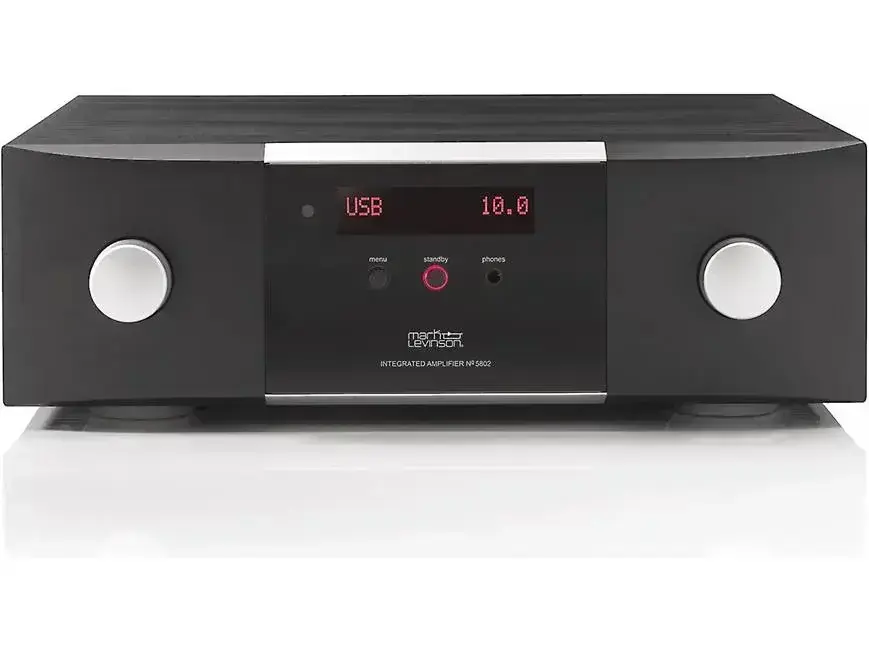
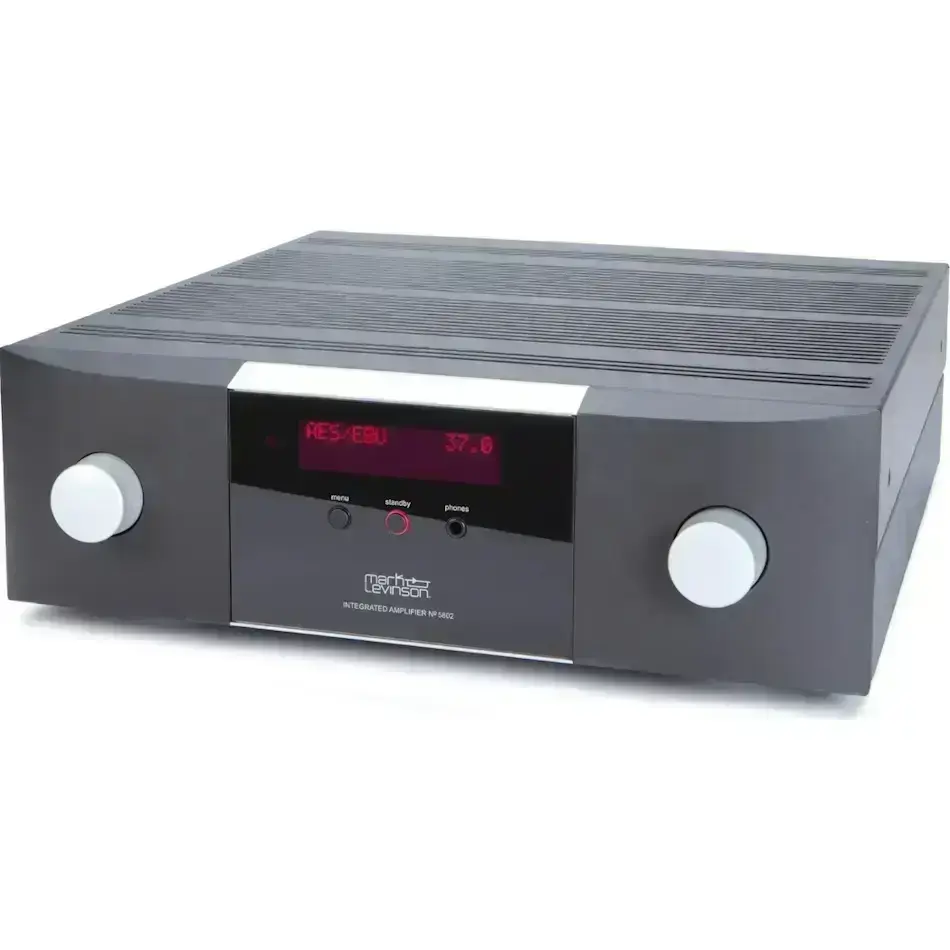
The Mark Levinson 5802 Integrated Amplifier is examined in retrospect by Mack Kahn
Introduction
They say you know your stuff best. And so, it makes sense to occasionally relook at your own components and evaluate them in relation to new advanced offerings in the market. How else will we justify to our spouses the urgent need to buy a new amplifier instead of another vacuum cleaner…?
I have owned a ton of both expensive and budget gear over the years only to end up second guessing a few weeks later if what I had bought is truly an upgrade or simply a change. My journey in high end began with the acclaimed NAD 3050 and a pair of Advents back in the 80s, moving on later to separates. I have owned amplifiers from a wide range of manufacturers over the years including McIntosh, Audio Refinement, Odyssey, Adcom and others. I also enjoyed the sound of tubes but always thought my Jadis Reference lacked power to drive my speakers.
However, apart from tube gear, I have found most solid-state components to sound similar in nature, boiling down to splitting hairs trying to tell them apart. So, I am not sure what made me buy another solid-state amplifier having become comfortable with what I owned.
But as is medically proven on some planet, upgratisitis’ is real, and hence the reason for this article. I have always marveled at the ads for Mark Levinson (ML) amplifiers, their blend of high-end audio engineering with striking industrial design. And so, when a deal came around to acquire a piece of what is considered in the audiophile world, an ultra-high-end gear, I jumped on the opportunity and bought a Mark Levinson No.5802 integrated amplifier.
The Brand
Widely regarded in the audiophile community as an ultra-high-end brand, Mark Levinson, the engineer, and designer, is known as a pioneer of high-end amplification and digital playback. A gifted musician, Levinson’s relentless pursuit of better sound reproduction led him to establish his very own company named Cello in the 80s and that became a symbol of excellence in the audio industry. The brand’s reputation eventually led to its acquisition by Harman International, which is later acquired by Samsung in 2017 and that also now owns JBL, Harman Kardon, Revel, AKG, and Lexicon.
From the start, Samsung allowed each brand to engineer its products independent of any corporate influence and continues to still do so. Mark Levinson products are also part of premium audio packages equipped in high-end automobile brands like Lexus. The relationship between both brands appears to tout exclusivity and the sound is top notch.
The Model
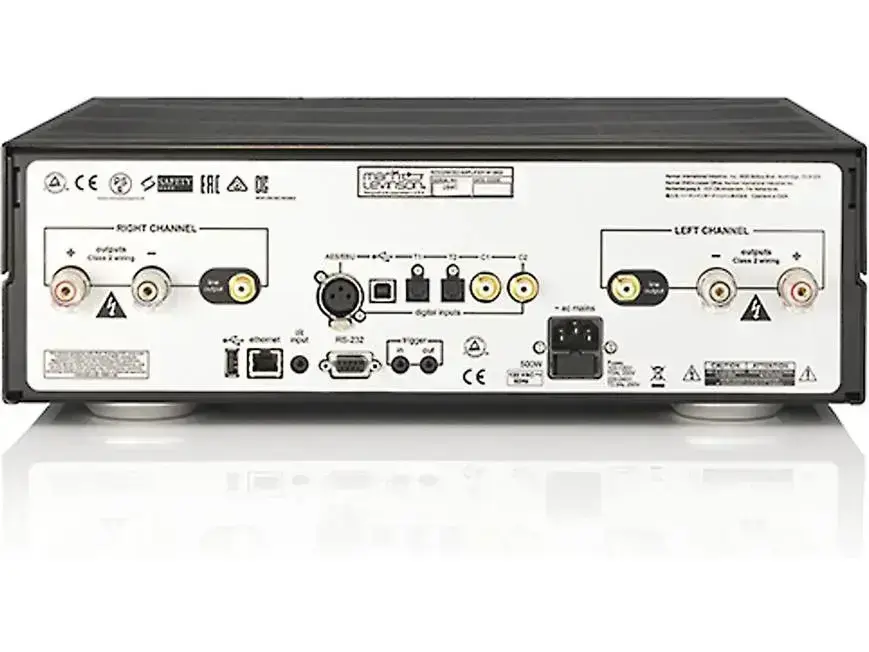
As I mentioned, the No. 5802 is an all-digital amplifier. It is in the family of the manufacturer’s storied 5000 series of amplifiers that attempt to bring ultra-high-end sound to a slightly more affordable price point. There are no analog inputs and the six digital inputs provided only support AES, Coaxial, USB and Optical S/PDIF formats. Its bigger brother, the No. 5805 offers analog inputs but is considerably more expensive. As it replaced an all-analog amplifier, all I had on hand were analog cables. So, the first order of the day is to acquire some decent digital cables.
I settled on a combination of DH Labs and Audio Quest digital offerings, which set me back some additional sum of money. Also, while inserting the optical cable into the Mark Levinson, I broke the hinged dust cover on the corresponding optical input, not realizing the slightest pressure can cause it to happen. Fortunately, Amazon stocks replacement hinges and a pack of 12 set me back a mere $10. This little bit and the fact that the amplifier requires download of its latest firmware, not an easy task I might add, were the only challenges I faced during setup.
The amplifier is a fully discreet, direct coupled, class AB amplifier with an oversized (500+ VA) toroidal transformer. It has individual secondary windings for the left and right channels. Power is provided independently to each channel, rather than both channels sharing it, which reduces crosstalk, lowers distortion and ensures heavy program material does not drain power away, creating a dual mono power supply inside a single chassis.
The benefits can be heard in terms of improved channel separation, where sound stays distinct without signals bleeding into each other, more detail retrieval and the dynamic musical peeks sound cleaner without clipping and muddying the soundstage.
In addition to the oversized power supply, the amplifier’s voltage topology is derived from ML’s acclaimed No. 534 amplifier. Voltage is regulated via four 10,000 microfarad capacitors per channel, ensuring that there is more than enough juice for the amplifier’s conservative rating of 125W/Channel at 8 Ohms and 250W/Channel at 4 Ohms.
At the heart of the amplifier’s architecture, resides the ESS Sabre 32-bit D/A Converter (DAC) chip which is part of ML’s proprietary Precision Link II Digital-to-Analog Convertor (DAC). The ESS Sabre DAC chips are famous for pushing the boundaries of ultra resolution and have a reputation for delivering massive dynamic range, ultra-low distortion and exceptional clarity. As a result, the amplifier can process ultra-hi-resolution, master quality studio, PCM, DSD and MQA format files with incredible clarity.
Additionally, ML has addressed the dreaded jitter problem by integrating the ESS Sabre chip in a manner that, rather than fixing errors after they happen in the digital domain, completely re-clocks the incoming digital stream asynchronously. It is difficult to eliminate jitter, which are tiny time domain errors that are prevalent when digital soundwaves are converted to analog. However, in the case of No.5802, much has been incorporated in its architecture to minimize it. The net result is proper pace, rhythm and timing (PraT) of the reproduction.
The Setup
The Mark Levinson replaced an older but highly regarded NAD C375 BEE integrated amplifier. The NAD is the brainchild of the company’s designer Bjorn Erik Edvardsen, hence the ‘BEE’ at the end. In October 2009, Stereophile reviewer Sam Tellig featured the 150Wpc NAD C375BEE integrated amplifier in his column. He praised its ability to compete with the best solid-state amplification, adding it performs “way, way, out of its price class, with deep bass and high power” [Stereophile, October 2009,].
He noted the amplifier’s exceptional performance that “rivals the finest solid-state gear” and having outstanding “solid-state powerhouse” capabilities that perform above its price point. The amplifier features technology derived from NAD’s Master Series, including pure Class A gain modules, and is once lauded for its transparency, low-end grunt and high-current drive.
Speakers are a pair of Harbeth C7 ES3s and a pair of Klipsch Heresy IVs, both on dedicated stands. A pair of German T+A Criterion seriesfloor stander speakers serve to occasionally ‘raise the roof’. As sources, there is a Linn Majik CDP for CDs and a Bluesound Node Icon Streamer. I subscribe to Qobuz and a couple of jazz stations. Novinyl.
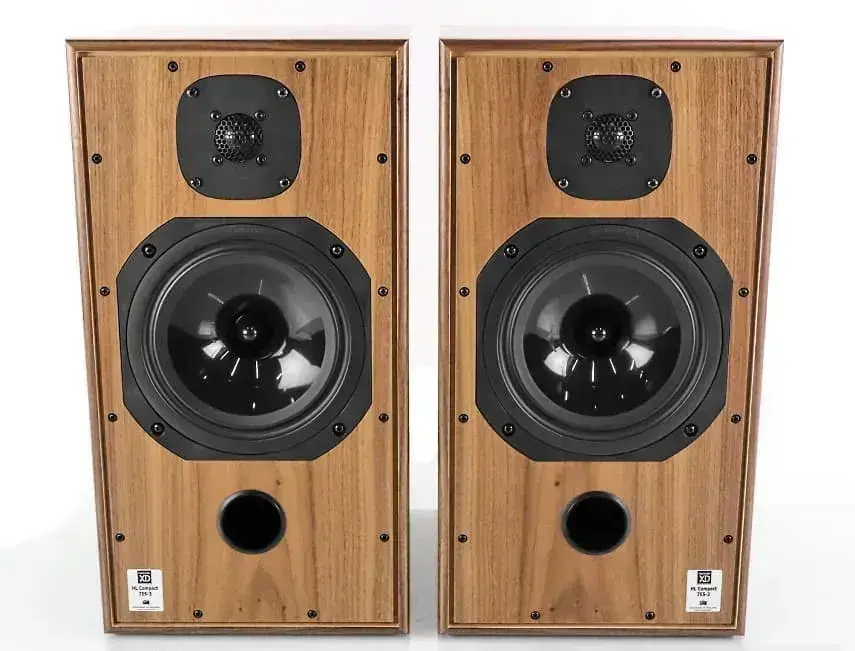
The Harbeths and the Klipsch hand off low end duties to a REL T9 subwoofer. The crossover is set at 40 Hz and that seems to gel with the system. All connectivity is via a mix of digital cables from DH Labs and AudioQuest. Speaker wires are Nordost Red Dawn and Analysis Plus Oval 9.
Finally, the basement is treated with sound absorption panels and sound diffusers from GIK Acoustics.
The Sound
Right off the bat, the first thing I noticed is just how three dimensional the sound is through Mark Levinson as compared to the NAD it replaced. The presentation is holographic with the sound remaining suspended between and around the speakers.
While streaming Leonard Cohen’s Ten New Songs on Qobuz (Columbia/Legacy Label release 2001, Sony Music Entertainment),recorded in Cohen’s home studio upon hisreturn from living as an ordained Buddhist Monk, the presentation is unmistakenly intimate with minimal electronic sound. “By The Rivers Dark” is a hauntingly beautiful track and Cohen’s deep and robust baritone voice remained suspended between and to the sides of the speakers. A great track to listen to at night. Very enjoyable indeed!
Another welcome quality of Mark Levinson (ML) is the level of resolution and transparency in whatever genre I listen to. I pulled out some of my CDs that feature live venue recordings, and it is a thrill to listen to them through ML. On Nisa, the opening track of Abdullah Ibrahim’s live jazz album titled Yarona (1995 Enja Records Matthias Winckelmann GmbH), recorded at the iconic Sweet Basil Jazz Club in New York city, has all the subtle cues of a live performance.
For example, at the very beginning of the track, there is a phone ringing in the club somewhere distant, but hard to hear. This is a great song to gauge spatial cues prevalent in live recordings. The ML brings out all the details without the need to strain my ears. Only a handful of amplifiers I recall have been able to flesh out details this good. Tube amplifiers gloss over the details as do some solid-state gear, in my experience. The only other amplifier I recall that provided very good detail is my McIntosh MA 6900.
The next characteristic of my ML amplifier that impresses me is the fluidity in its reproduction. Music flows coherently through the speakers. I would attribute this to the ESS Sabre chip within the Precision-Link architecture. As this configuration can re-clock any errors it experiences in the program material, there is a seamlessness in reproduction. No dropouts and no jitter to rob the naturalness of the playback.
On the track “The Tea Break” from Sinatra at The Sands CD (Reprise 9 46947-2), there is an abundance of live laughter and lip smacking by the artist between sips of tea, or maybe Scotch, which the ML reveals with fertile transparency. This degree of realism an amplifier offers, allowing you to close your eyes and visualize the performance that night in Vegas in 1966, is quite a treat.
Bass comes out with authority and slam. But you have to get the volume high enough for it. Nevertheless, the kick drum in the opening segment of Eagel’s Hotel California on Live From The Forum MMXVIII (Released by Rhino, 2020) and streamed via Qobuz, came through with immense visceral impact that could be felt. Higher up, on “Shoo Fly Don’t Bother Me” from Bluesiana Traingle CD (Windham Hill WD 0125), the drummer’s assault on the snare drum sounded sublime via the ML.
Finally, the remote control of the Mark Livingston bespeaks quality with a solid, metallic feel to it. It is a solid piece of machined alloy worthy of an ultra-high-end component.
The Comparison
As they say, nothing is easy in life, and neither is comparing one solid-state amplifier with another. Tubes can still add some signature of their own that can be discernible, but it is much more difficult to find differences among transistorized hardware. Most of the time, picking them out can boil down to splitting hairs. However, what is a revelation is how stark the differences can be between an all-analog versus a purely digital solid-state component.
The first difference I noted with the NAD back in the system is how louder and bolder the sound became. On the same Nisa track from Abdullah Ibrahim’s Yarona, referenced earlier, the image of the live performance seemed significantly larger. There is immediacy in the sound and hence more impactful presentation. I would say two distinct types of musical reproduction, with Mark Levinson opting for a slightly laid-back signature. With NAD, the sound had more dynamics and punch. A notch in its belt for being a 20-year-old amplifier.
The next difference I noticed is the size of the soundstage. With the NAD, the soundstage grew wider, but the depth was gone, and along with it, the center image. I would say the ability to cast a believable soundstage is not one of NAD’s characteristics. With it, the sound appears to extend to the outer edge of the speakers but is hollow in the center, robbing the feel of the band playing ‘in front of me.’ I realize if I put the effort into repositioning the speakers I could attain the phantom image, but that is too much of an agonizing effort each time I swap amplifiers.
In the present condition, the soundstage collapsing is a negative for NAD. Castilian Drums on the Dave Brubeck Quartet’s Live in Carnegie Hall jazz album of 1963 (Columbia-Legacy, streaming via Qobuz) through the NAD casts a somewhat blurry image of the performance unlike with Mark Levinson. Paul Desmond with his alto sax on that night is center right of Brubeck’s piano which is more to the middle of the stage and Joe Morello on drums is on the far left of the piano. NAD was unable to correctly point out where the performers were, whereas Mark Levinson did a much better job in portraying the ensemble correctly.
A pleasant surprise with NAD, however, is bass. It produces a much more tuneful and robust lower end than its counterpart. Bass from the 8” Radial driver of the Harbeth is impressive and I ended up turning down the sub a tad. The NAD may not sound as refined as the Mark Levinson, but what it lacks in refinement, it makes up in delivering that thump.
Using some of the same reference music, Mark Levinson removed a veil that was there before. Music has finesse and clarity. The NAD seems to gloss over the details that the ML lays bare. On Nisa again from Yarona, the NAD failed to reproduce the sound of the telephone nor some of the artist’s vocal expressions.
Finally, while both amplifiers build quality is exceptional, the NAD’s remote is an all-plastic affair versus the solid all metal one from Mark Levinson.
The Closing
A bit of trivia, thanks to Google AI. There is a school of thought once that subscribed to the notion that all “amplifiers sound the same.” In the late 1970s and 1980s, the HiFi world split into two camps: the “subjectivists” who believed that every component had a unique sonic signature and the “objectivists” who believed that all amplifiers operated within their power limits sounded identical. Two most famous reviewers to spearhead this belief were Julian Hirsch of Stereo Review and Peter Aczel with The Audio Critic (Google AI, www.audioholics.com, February 18, 2015 ‘The Sound of Audio Amplifiers: Can you hear the difference”).
Interestingly, this controversy seemed to have ended in 1985 with the famous Carver Challenge. Famed amplifier designer Bob Carver put forth a claim that he could take a cheap, off-the-shelf solid-state amplifier and modify its transfer function to sound exactly like an ultra-premium, boutique $12000 tube amplifier.
Carver successfully tweaked his cheap amp, a Pioneer, until the golden-eared, “subjectivist” reviewers, in a double-blind test, were unable to tell the difference. Ironically, this proved both sides correct: amplifiers can inherently sound different due to their interaction with speakers and if you match their electrical output characteristics precisely, they become indistinguishable. (Google AI, Reddit: Erin’s Audio Corner, July 29, 2025).
Over the years, more prominent designers have added their thoughts to this belief which has only added confusion in the audiophile community. Peter Walker, the founder of QUAD Acoustical Manufacturing, has been famously quoted saying that “all well designed components can sound the same under proper operating conditions”. He went on to emphasize that any perceived sonic differences usually come down to “peripheral effects” – such as mismatched termination impedances, bandwidth limits, or load interactions with specific loudspeakers, rather than the core amplification (Google AI, Stereo net, The Art of Sound Forum, Quadrevisie, Reddit and Youtube).
I have just one thing to say to all this. Amplifiers can sound different but not necessarily better than one another. While comparing an analog to a digital electrical signal is akin to an apple and an orange, older technology remains equally capable of good sound and the NAD proved it is no slouch. In the end, the best amplifier is the listener, and I am happy to own both.
Key Specifications
Power Output: 125W per channel at 8 ohms; 250W per channel at 4 ohms (stable down to 2 ohms).
Amplification Type: Fully discrete, direct-coupled Class AB dual-mono with a 500+ VA toroidal transformer.
Digital-to-Analog Converter (DAC): Precision Link II DAC featuring an ESS Sabre 32-bit D/A converter and full MQA decoding.
Digital Inputs: 1 x AES/EBU, 1 x asynchronous USB 2.0, 2 x coaxial S/PDIF, 2 x optical S/PDIF.
Wireless: Bluetooth with aptX-HD support.
Outputs: 1 x variable stereo RCA line output, 1 x 1/4-inch front-panel headphone jack
(MainDrive), and 2 pairs of high-current binding posts.
Control & Integration: Ethernet (RJ45), RS-232, IR input, 12V trigger input/output, and USB for
updates/setup via a web browser.
Dimensions & Weight: 17.25″ W x 5.72″ H x 19.98″ D; weighs 61 lbs. (27.6 kg).
Review submitted by Mack K.
MARK LEVINSON 5802 INTEGRATED AMPLIFIER ~ current price : $7,000.00
US: +1 888 691 4171
UK: +44 1707 668 012
THE SOUND ADVOCATE
WHERE the MUSIC BEAT meets the AUDIOPHILE ELITE ! SUBSCRIBE BELOW!
Thank you for subscribing.
Something went wrong.