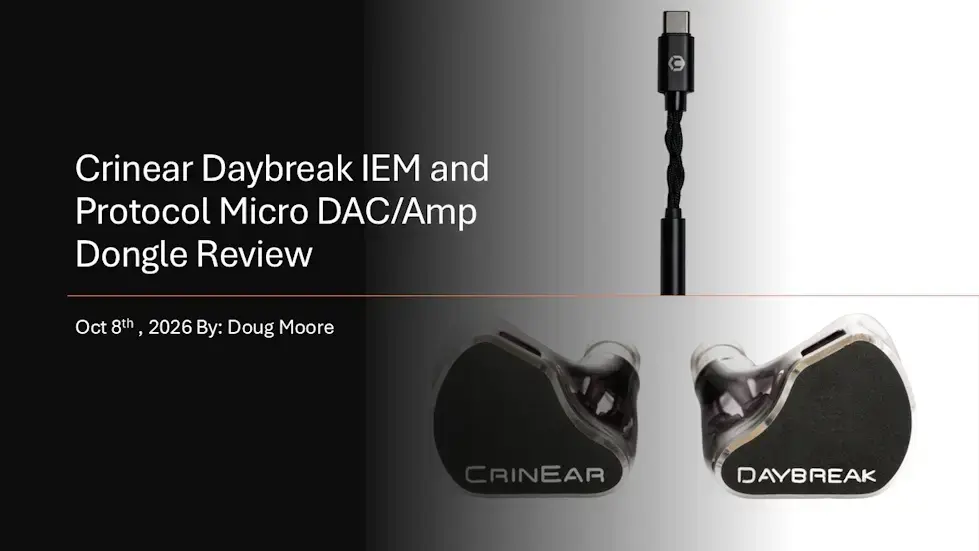
The Crinear Daybreak IEM and Protocol Micro/DAC Amp is thoroughly investigated by Douglas Moore
INTRODUCTION
There are things going on in technology today that were only thought of in sci-fi movies 30 years ago. The future is here, and some of us are so involved with the problems to even see it. I am not saying that the issues we face today are to be ignored, but I think all of us deserve to take a minute and breathe in all we can do today.
Audio is the same way. When I was a kid in the 80s and 90s, the only way to get true audio realism is to listen to a CD or album on a high-end two-channel system. I know this as I managed an audio shop in my hometown and knew most of the music lovers in the area. We sold some of the better audio of the day; Aragon, Acurus, Adcom, and Mirage were just some of the brands we sold, and we were well loved for it.
We also worked on equipment and would fix or modify speakers as well. In fact, I cut my teeth in speaker building and crossover design in this era. We set up large two-channel audio systems and knew that this was the only way to truly hear the music we loved. Portable Walkmans and boom boxes were limited at that time and just could not do music justice. If I knew at that time that some 30 years later, I would be listening to a portable rig that could stand up to the large two-channel rigs, I would say you were nuts!!! But here we are!!!
I love personal audio products, mostly because they give you so much for the money. In fact, if you took the price-to-performance ratio of personal audio products vs. large two-channel products, the difference is staggering. The products I will be discussing today fall directly into the unbelievable for the money side of things. I love playing in the affordable end of this audio category and get a thrill out of recommending affordable products to folks getting started or just needing something great on a budget. Corin Koh is a Singaporean audiophile and former product reviewer who has been on the scene for years. His handle online is Crinacle and is well known in this world. He is popular enough that he has done collaborations with Moondrop and Truthear , which are well-respected IEM manufacturers that use his knowledge in audio to help tune their products.
This is impressive and shows just how much he is respected in this field. Having companies approach you wanting your say in a product’s tuning is one of the ultimate shows of respect I can think of. But that was not enough for “Crin”; he wanted his own product on the market so he could be involved in every bit of the process. After some development, early prototypes, and limited edition runs, Crin unveiled the Daybreaks for the world to see.

The Daybreaks, being Crin’s first product, was important to make a good impression on the headphone world. Headphone lovers and IEM lovers especially are a nice bunch but can rip apart a bad design in seconds, and that is why it is important to come out swinging. And in the design of the Daybreaks, that is exactly what Crinacle did.
The drivers in the Daybreaks are a mix of a custom-designed dynamic subwoofer, twin balanced armature drivers for the midrange, and twin micro-planars for the treble. Having planar drivers for the tweeters was especially surprising at this price level. Each driver was chosen to give the Daybreak a speaker-like presentation with help from the Brüel & Kjær Type 5128 ear simulator. This simulator is the newest cutting-edge measuring device for IEM headphones, and Crin used it extensively in tuning the Daybreak. As a speaker designer myself, I know how difficult it can be to sum drivers in a speaker, but to do it with micro drivers in a little cavity impresses me.
TECHNICAL BACKGROUND
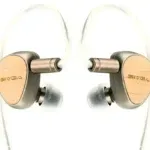
With Full Resin shells and aluminum caps and nozzles, the Daybreaks are built very well, especially well given their relatively low price point for what they offer. The nozzles are around 6mm, which is nice, seeing that a lot of tips on the market will easily fit them.
But that might not be an issue since Crin includes both standard bore and wide bore tips in all sizes, as well as a pair of foam tips for fans of such, so finding your fit should be easy. The special wide bore tips were a recent add-on due to requests from the masses after some early reviews showed this style of tip sounded better, and I agree, as that is the tip I liked best(and used during the review process).
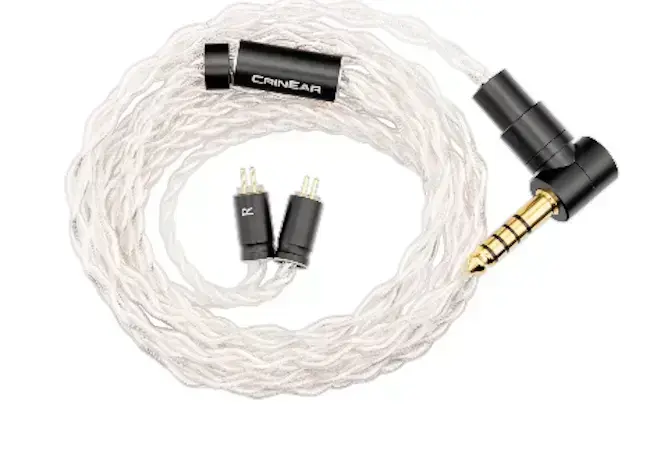
The overall size of the Daybreak is on the larger side compared to something like the Meze Alba, but not so much as to cause most people any issues. And I found them to fit and stay in my ears just fine. The included cable is of good quality for the price point and features silver-coated copper wires and a standard 2-pin connector style (which is great if you decide to upgrade or change cables). Plus, the included cable has a modular jack system that allows you to choose either a 3.5 or 4.4mm connector. This proved very useful as it allowed me to switch between my sources no matter what connector type they used.
And speaking of sources, the source I chose to review with these IEMs is another Crinear product that just hit the market called the Protocol Micro .The Micro is a very small DAC/Amp dongle that fits between your device and IEMs in line with the cable that takes care of DAC and amp duties.
Being that the Micro is very small, it is both easy to connect and easy to live with. It features a SPV4040 DAC chip, which is basically a SOC design that includes a DAC, amp, and DSP processor in one chip. That’s right, I said DSP! The Micro has a trick up its sleeve that very few products at this price pack($9.99)! The Micro has a built-in 8-band parametric EQ that allows you to use a web-based application to EQ any connected headphones.
The EQ you set up will save to the Micro and will stay working no matter what source you plug the Micro into. Just go to the EQ. hangout.audio link and go through the options to EQ your headphones. The options are cool for folks that want an easier way to transform your IEMs to another sound signature, and with Crinacle’s extensive database of IEMs you can even EQ yours to sound like another model (at least in frequency response). The Micro puts out 30 milliwatts, which for most IEMs is plenty of power, and with the Daybreaks at 105dB/mW, it packs more than enough. That is one of the main reasons I chose the Micro for this review; it packs more than enough power and features and offers a super small form factor that makes on-the-go IEM listening a breeze. Just like the Meze Alba that includes a dongle in the price, you might as well get the Micro with the Daybreaks as a package deal. I liked this little system so much that most of my listening was done with this combo, as they seemed perfect for each other, and while better sources sounded better, the difference was not always worth the added complexity. For someone traveling, or wanting to keep their audio less complex and simple, these two together proved great.
Now, for a total price of $169.99 for the Daybreaks and $9.99 for the Micro, that is a total price of $179.99 and free shipping on either Crinacle’s own site or Amazon.com. That is both an inexpensive and easy way to get into a quality sound system. While this system is inexpensive in the grand scheme of things, it is important for me to be transparent about the performance of this system, as I see it as a starting point for many music lovers.
THE SOUND AND ALBUMS
Lizz Wright and Kenny Banks’ new 2026 album (Nearness) is a masterclass in vocal reproduction as it will test your system’s resolve in the midrange. I have had this album on repeat on several evening sessions and recommend it to anyone who loves great jazz albums.
The Daybreaks and Micro combo showed me that Crin wanted these to have a great midrange. Vocals had great body and seemed to sit well in the mix. There wasn’t any overdone sharpness or sibilance that I could hear, and the overall sound had a level of instrument separation that was good for the price. These kinds of traits are generally more at home in more expensive IEMs, so I was quite surprised here.
The bass was elevated but not so much as to take away from the midrange. For users who want dead neutral, or don’t like bass, might look at Crin’s own Reference IEM, but for listeners that like their sound with a slight bass bump, stay tuned. While these IEMs have a bass shelf, it is done tastefully and keeps good bass detail and speed.
There are a lot of bad-sounding albums from the 80s, but Lionel Richie’s 1983 album (Can’t Slow Down) is not one of them. Every song on this album is done well, with only the occasional mic swallowing on Lionel’s lower registers. A good system will let you hear exactly when this happens, and the Daybreaks showed me this. Other than this little niggle the album’s sound is great and allowed me to test the prowess of the Daybreaks.
One thing about IEMs is that some listeners can get a great soundstage while others get none. That is because some listeners have an ability to tune into the timing and phase of a recording better, which is what gives you instrument placement on the stage. I am very tuned into this, and the Daybreaks gave me a great soundstage for their size and price class. I say the size because IEMs are tiny devices compared to full-sized headphones and directly compare sound as such.
My reference desktop rig using full-sized planar headphones has both better soundstage and image scaling, as well as an overall sense of space. But this is to be expected and a small price to pay for the small and easy-going size of the Daybreaks. The Protocol Micro allowed me to get most of this soundstage and imaging, but it got even better when I switched to the iFi Go Blu Air and Hip DAC. These two units have better internal DAC’s and amplifier circuits, and the Daybreak allowed me to hear this. The Micro is great for a $10 dongle, and it will get you 80 to 90% of the soundstage available, but the Daybreak’s will scale. In my listening, I found soundstage width and stage depth to be very good for the price and are only beaten by much more expensive IEM’s or full-sized headphones.
*For folks wondering why I am comparing the Daybreak/Micro system with some full-sized systems, it is because many of us strive to find a small-scale, easy-to-carry copy of our home desktop system that we can take on the road. We hope it can give us a sound as close as possible to what we get at home. While I do understand that some listeners prefer IEMs and will only listen to them, our site takes every way to listen to music into account.
The last album I tried in my series of serious listening was one that is different. People who have read my reviews in the past know that I have a soft spot for what is called Doom Metal and Stoner rock. The music just speaks to me! The rowdy and fuzzed-out guitars and driving tone just get me going. And Valley of the Sun’s 2026 album “The Blacklight Sessions” is one of many albums I love. And with the Daybreak/Micro combo, I enjoyed it immensely! It was not a perfect experience, as the Balanced Armature drivers just don’t do guitars the same way as a good dynamic driver. It’s an issue that many people talk about. BA drivers and the way they work just give distorted or fuzzed-out guitars a metallic sheen. For guitar players like me, it is easily heard, and while it is very small in the Daybreaks, it is there.
The midrange tonal balance is practically perfect for this music, so it’s not a response thing, but the way the midrange is produced by the drivers. The drums and bass guitar were very detailed and had good drive with the Daybreaks. The small bass shelf that Crin designed into the Daybreaks does this style of music great, as it gives a little extra energy to the driving instruments of this music.
As for the treble, it was very detailed, allowing cymbals to have good snap and authority, although the body of the cymbals was nothing compared to my 2-channel or desktop headphone systems; they were good for a tiny device. Occasionally I felt the treble was boosted a little too much and would give cymbals a little too much sizzle; however, it never got fatiguing. I will advise users to use the new wide bore tips if you can, as they produced the best mannered treble and will be the best bet for a non-fatiguing listen.
The one area I thought that the Daybreaks punched well above their price range is instrument placement. Vocals sounded excellent and were placed where they naturally would in the mix; guitars were placed to the side of the stage, and if there was more than one, they would easily be separated in the mix. All of the instruments had their own space to breathe, which is quite impressive and can be hard to find for the price.
Post PEQ:
One of the great things about the Protocol Micro is the built-in PEQ. I was able to go to eq.hangout.audio and apply an auto-generated PEQ to the Micro, specially tuned to flatten the response of any IEM on the list! I can even take my Daybreaks and retune them to sound closer to another popular IEM. While I did not want the Daybreaks to sound like any other IEM, I did use the auto EQ feature to flatten the response of the Daybreaks. After this EQ was applied, things changed considerably.
One of the things I noticed right away is that the cohesiveness of the Daybreaks went up considerably to my ears. Not sure if this was because the IEM was more balanced sounding or if it shifted the tuning to allow the drivers to blend better, but I liked it. For folks that want to take the plunge into PEQ, this could be a transformative experience.
Most of the issues that I spoke about with the stock tuning improved, and I was left with an IEM that allowed me to hear the music as the artist intended. Tonality overall improved as the Daybreak was more linear in its response while keeping the great instrument separation that still impresses me for the price. Now, I did most of this review without using PEQ as I felt my readers deserved to get a review of the Daybreak straight out of the box. But for those that will use this feature, it is well worth looking into!!!
Comparisons (Stock Tuning):
The Meze Alba is an IEM I know well and one that I have owned since they were unveiled. It is a great IEM for its price and is hard to beat when you consider the fit and finish and small size of them. They are a single dynamic driver IEM that uses a special 10mm driver in its design. They are priced right in line with Daybreaks but are designed and tuned completely differently. To me, the Alba is tuned to showcase the timbre of instruments and the cohesiveness of its driver. In this regard, the Alba beats Daybreak. But the Daybreak fights back with a midrange that is very even-keeled (With the Wide Bore Tips). I actually prefer the midrange on the Daybreaks, with the exception of a little BA(balanced armature) sound on some guitar tracks.
Vocals sound more natural on the Daybreaks. In the treble, it always sounded like the Alba was trying to bite off more detail that they could chew! What I mean is that while they are detailed in the highs, they can sometimes get the totality wrong and give cymbals and other instruments an almost odd sense of tone. The Daybreak with the new wide-bore tip is much smoother and more natural-sounding in the highs. Soundstage and imaging ability are about equal, given that the newer wide-bore tips vastly improve the Daybreak. Both are great IEMs, and I would choose the one that fits your lifestyle and music choices best, because with a little PEQ, either of these choices can be winners.
The Sivga Que is an IEM that seems to have quite the following, most likely because it is an inexpensive IEM that provides a full metal shell and build quality that seems to be better than its price of $69. It is a very warm-sounding IEM that is tuned for folks that like a classic warm tone.

Bass tonality is built on smoothness rather than tight transient response, and this follows through into the midrange. The treble is a nice, relaxed sound that, while it doesn’t do detail any favors, it won’t ever get fatiguing. I have to be in the mood to enjoy the Que, as the fit just does not jive with me. With their full metal shell and size, they can be quite ear-heavy, and with the wrong tip, won’t stay in place.
Soundstage, imaging, and instrument placement are not the Que’s strong suit and will quickly show why they are priced where they are. But those of us searching for the ultimate in music detail won’t be looking in this price class anyway. The Que is a great IEM for chilling out and not caring about the last-minute detail or being wowed by the image or soundstage. And in this comparison, they would be better utilized as an occasional listen or as a backup IEM.
Conclusion:
The Crinear Daybreak and Protocol Micro make one heck of a combo at the $179.99 total price. It gives you a very slight V-shaped tuning that can be fun, and with the Micro’s PEQ ability, you can make them as linear as you wish. This combo compared favorably to any other IEM in its price class that I have heard(and plenty more at higher prices). No, it won’t unseat some of the flagship IEM’s floating around out there, but it will give most listeners a true taste of high-end level sound. And at the total price of the system, it won’t make you scared to take them with you in your travels. I think Crin has done a fine job creating something special here. For the record, I purchased my set of Daybreaks and Micro; these were not sent to me. I fully intend to enjoy them for a foreseeable future. Very Highly Recommended!

Reference Headphone System: Headphones: HiFiMan Arya Stealth, Meze Alba, Sivga
Que, Crinear Daybreak. Amplifiers: Schiit Audio Asgard X, Ifi Hip DAC, Ifi Go Blu Air,
Crinear Protocol Micro. Sources: Samsung Galaxy S25 Ultra, Dell XPS13 9345, Custom
Linux-based desktop server, Wiim Ultra with JDS Labs Synapse Max.
Specifications:
Daybreaks:
Price: $169.99
Driver configuration: 1DD + 2BA + 2mPT (Micro-planar Tweeters)
Impedance: 20Ω @1kHz
Sensitivity: 105dB/mW @1kHz
Frequency Response Range: 2Hz ~ 40,000Hz
Nozzle Width: 6.0mm (lip)
Cable Material: Silver-plated Copper
THE SOUND ADVOCATE
WHERE the MUSIC BEAT meets the AUDIOPHILE ELITE ! SUBSCRIBE BELOW!
Thank you for subscribing.
Something went wrong.